








Number №4, 2025
Legal Sovereignty of the Individual in Digital Healthcare in the Era of Artificial Intelligence
Number №3, 2025
Digital Health: Forecast for 2025-2030
Number №2, 2025
Digital technologies in remote monitoring of childbirth with a Clinical decision support system (CDSS)
Number №1, 2025
Digital technologies for health promotion and disease prevention in older adults
Number №4, 2024
Computer reconstruction of the interaction of genes associated with Angelman syndrome
Number №3, 2024
Telemedicine today: trends in the use of telemedicine consultations based on regional experience
Number №2, 2024
Mobile apps for psychological well-being: user attitudes and definition of requirements
Number №1, 2024
Diagnosis in the era of digital medicine
Number №4, 2023
Artificial intelligence in Russian healthcare: collecting and preparing data for machine learning
Number №3, 2023
China as a supplier of medical equipment in the Russian Federation. Options for cooperation and features of working with Chinese suppliers
Number №2, 2023
Experience in teaching telemedicine in the system of higher professional education The attitude of medical workers to telemedicine technologies
Number №4, 2022
Physician burnout: the hidden healthcare crisis. Results of an online survey of doctors
Number №3, 2022
Interaction of clinical and diagnostic medicine. Results of an online survey of doctors
Number №2, 2022
Mobile applications for mental health self-management: a review of customers’ opinions Ultrasound robots: ready-to-use solutions and perspective directions
Number №1, 2022
Digital transformation of the pathological service as a way to improve the quality of medical care
Number №4, 2021
Clinical guidelines of the Ministry of Health of the Russian Federation: are doctors ready to follow them? Results of an online survey of doctors.
Number №3, 2021
Виртуальная реальность (VR) в клинической медицине: международный и российский опыт
Number №2, 2021
Дистанционные консультации пациентов: что изменилось за 20 лет?
Number №1, 2021
Experience of participation in the blood pressure telemonitoring pilot project of the Ministry of Healthcare
Number №4, 2020
Автоматизация процесса выявления у беременных заболевания COVID-19
Number №3, 2020
Remote cognitive behavioral therapy for stress disorder associated with the COVID-19 pandemic
Number №2, 2020
Distance education at a medical school during the COVID-19 pandemic: the first experience through the eyes of students
Number №1-2, 2018
Ответственность при использовании телемедицины: врач или юрист Скрининг меланомы: искусственный интеллект, mHealth и теледерматология
Number №3, 2018 год
II Всероссийский форум по телемедицине, цифровизации здравоохранения и медицинскому маркетингу «ТЕЛЕМЕДФОРУМ 2019» Эффективность телемедицинских консультаций «пациент-врач» Телереабилитация: рандомизированное исследование исходов
Number №1-2, 2019
Роль искусственного интеллекта в медицине Информационная система поддержки принятия врачебных решений
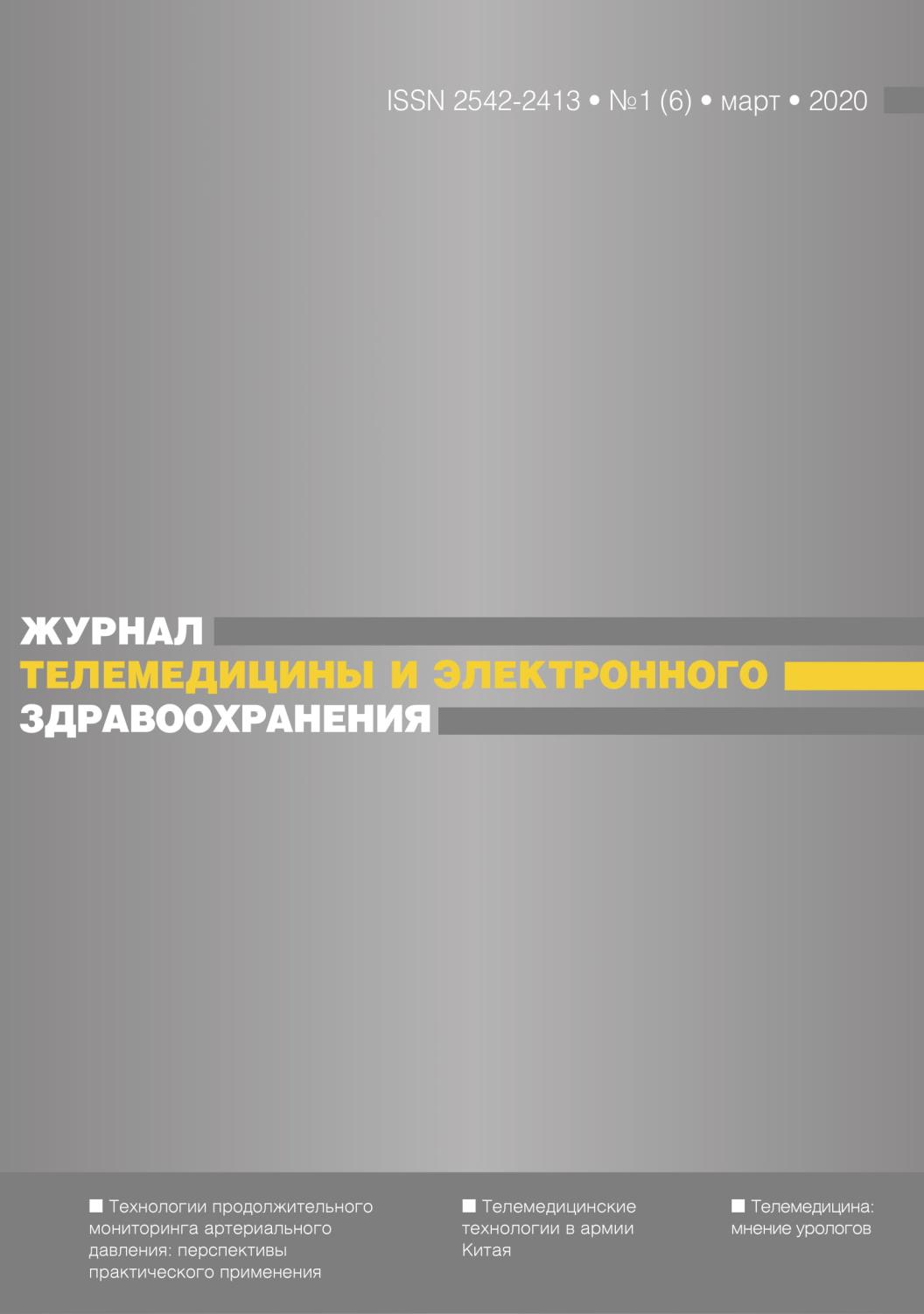
Number №1, 2020
Technologies for continuous monitoring of blood pressure: prospects for practical application Telemedicine technologies in the Chinese army
Number №2, 2017
Primary telemedicine consultation "patient-doctor": first systematization of methodology
Number №1, 2017
1. A systematic review of using Internet messengers in telemedicine 2. Telemedicine and social networks in the fight against drug addiction
Number №1, 2016
1. The Experience of the Telehealth Network of Minas Gerais, Brazil 2. The Remote Monitoring of Patients with Congestive Heart Failure:The Organizational Impact..
Number №1, 2015
Teleassessment for diagnosis and treatment in urology Efficiency of telemedicine at the northern regions Russian Federation A.L. Tsaregorodtsev

Telemedicine use in the managment of ADHD patients

Number №4, 2023 - page 23-35
DOI: 10.29188/2712-9217-2023-9-4-23-35
For citation: Shaderkina A.I., Alekseeva M.V., Batysheva T.T., Klimov Yu.A. Telemedicine use in the managment of ADHD patients. Russian Journal of Telemedicine and E-Health 2023;9(4):23-35; https://doi.org/10.29188/2712-9217-2023-9-4-23-35
Shaderkina A.I., Alekseeva M.V., Batysheva T.T., Klimov Yu.A.
Information about authors:
  • Shaderkina A.I. – junior researcher Scientific and Practical Center for Pediatric Psychoneurology of the Moscow Department of Health; junior researcher Federal Scientific Center for Psychological and Interdisciplinary Research; Moscow, Russia; RSCI Author ID 1064989, https://orcid.org/0000-0003-0639-3274
  • Alekseeva M.V. – PhD, Deputy Director for Organizational and Methodological Work of the Scientific and Practical Center for Pediatric Psychoneurology of the Moscow Department of Health; Senior researcher Federal Scientific Center for Psychological and Interdisciplinary Research; Moscow, Russia; RSCI Author ID 925525
  • Batysheva T.T. – Dr. Sci., Professor, Director of the Scientific and Practical Center for Pediatric Psychoneurology of the Moscow Department of Health; Head of the laboratory Federal Scientific Center for Psychological and Interdisciplinary Research; Chief Freelance Children's Specialist of the Ministry of Health of the Russian Federation for Medical Rehabilitation, Chief Freelance Children's Specialist of the Moscow Department of Health for Neurology; Moscow, Russia; RSCI Author ID 945308
  • Klimov Yu.A. – Ph.D. M.N., Dean of the Faculty of Medicine of the Russian State Social University; Moscow, Russia; RSCI Author ID 945310, https://orcid.org/0000-0001-5946-094X
4220
Download PDF

Introduction. Attention deficit hyperactivity disorder (ADHD) is a disease of the group of neuropsychiatric developmental dis- orders, the main symptoms of which are hyperactivity, attention deficit and impulsivity. Behavioral disorders in ADHD, the childhood age of most patients, the need to control the side effects of psychotropic drugs, and limitations in the availability of medical care сan lead to the need for searching for alternative options for the management of patients with this disorder, such as telemedicine and methods of remote monitoring of the disease. The aim of this review is to analyze modern methods of professional medical care for patients with ADHD.

Materials and Methods. Literature review was conducted using PubMed, Scopus, and GoogleScholar databases, and the study included literature sources not older than 5 years.

Results. We conducted a literature review and analyzed current trends in the management of patients with ADHD using remote technologies. Currently, all these steps can be achieved by using of telemedicine technologies: remote teleconsultations, the use of digitized questionnaires and cognitive tasks, the introduction of psychotherapeutic tools into patients' daily lives through augmented and virtual reality technologies, and the use of apps and wearable devices for symptom tracking.

Conclusion. In summary, the analysis has demonstrated the certain aspects of managing patients with attention deficit hy- peractivity disorder using telemedicine technologies. Modern technologies make it possible to achieve control over the course of ADHD, reduce the severity of its symptoms and improve the quality of life of patients with ADHD.

Attachment Size
Download 467.43 KB
Keywords: attention deficit hyperactivity disorder; telemedicine; VR technologies