
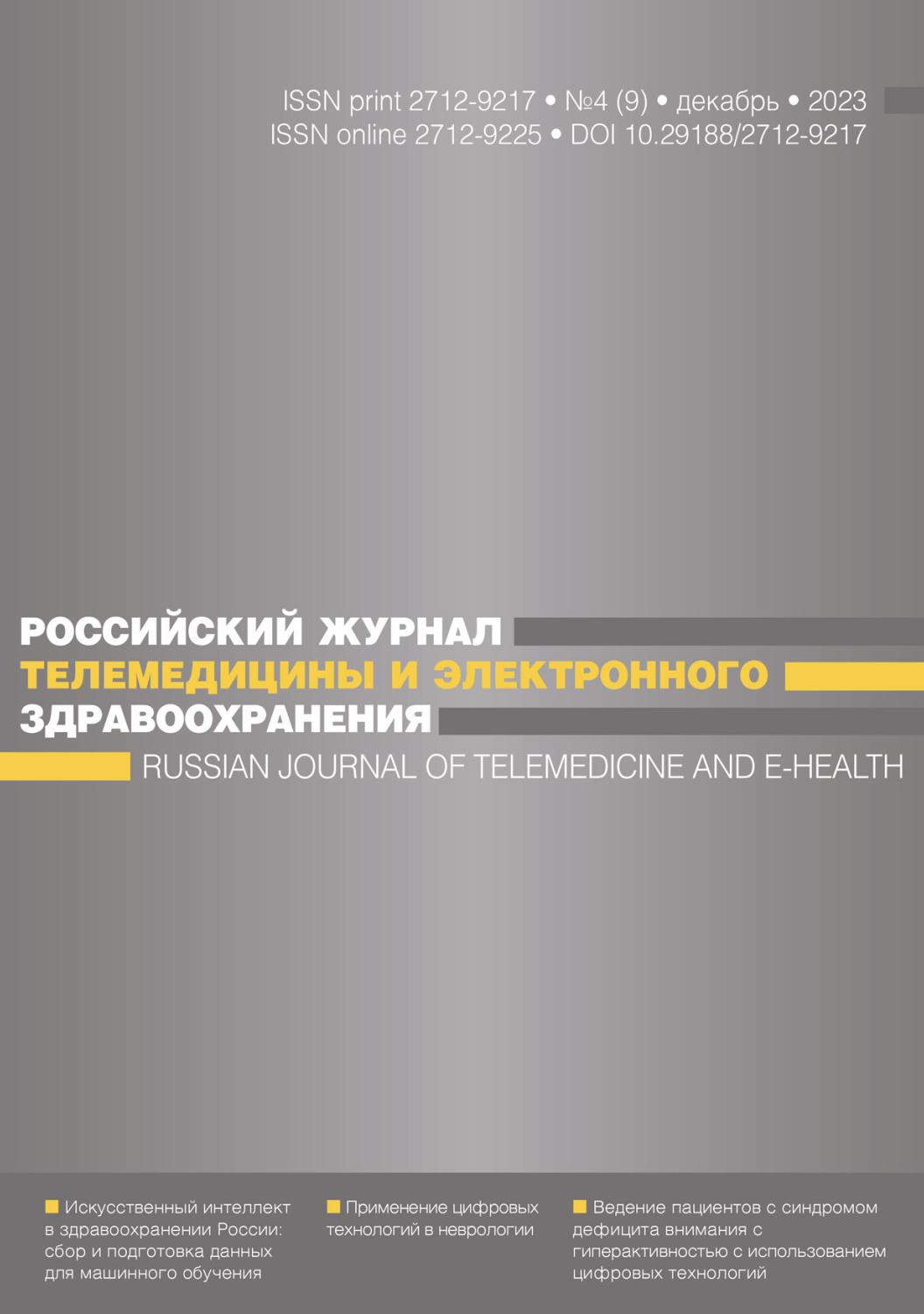
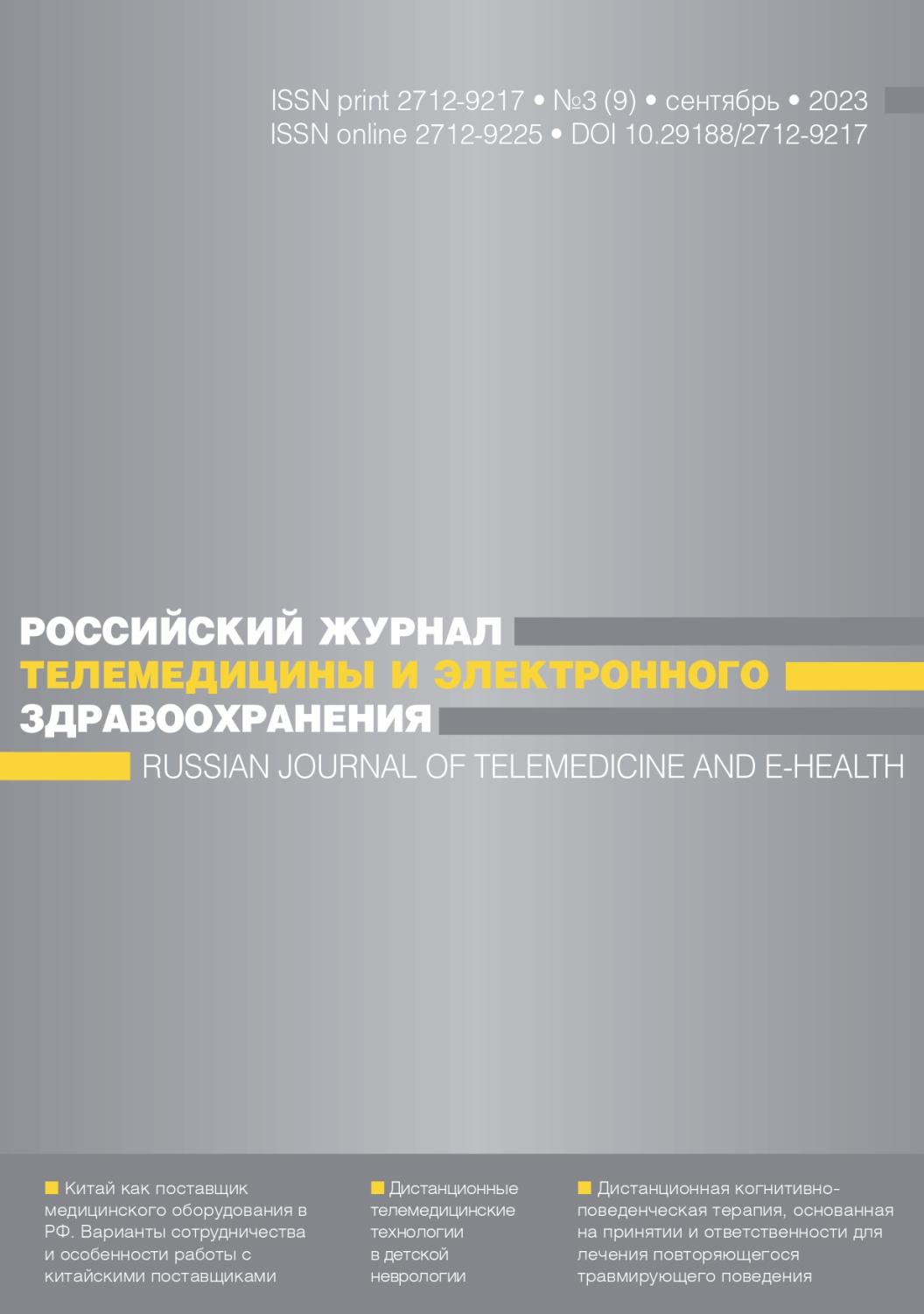
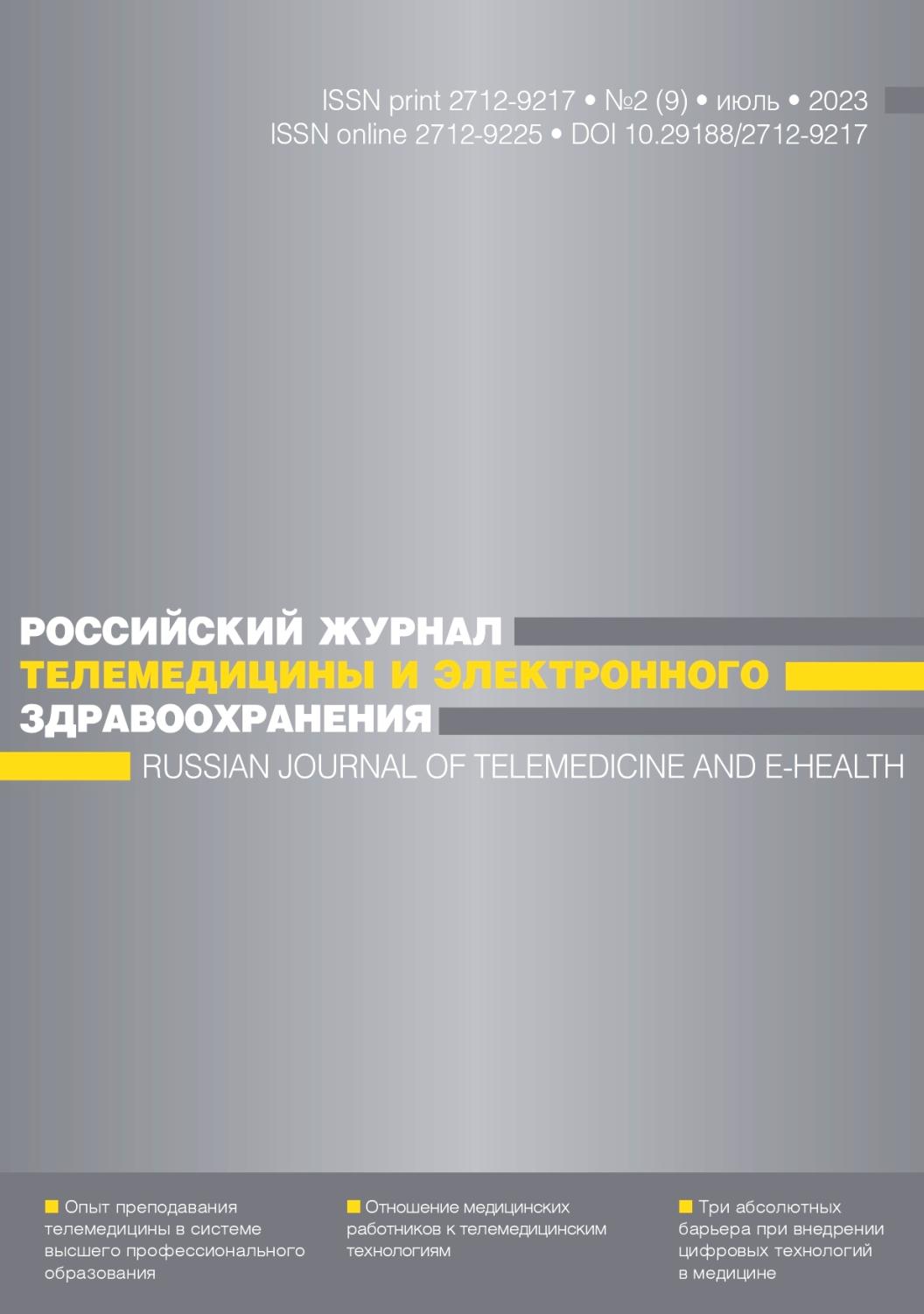
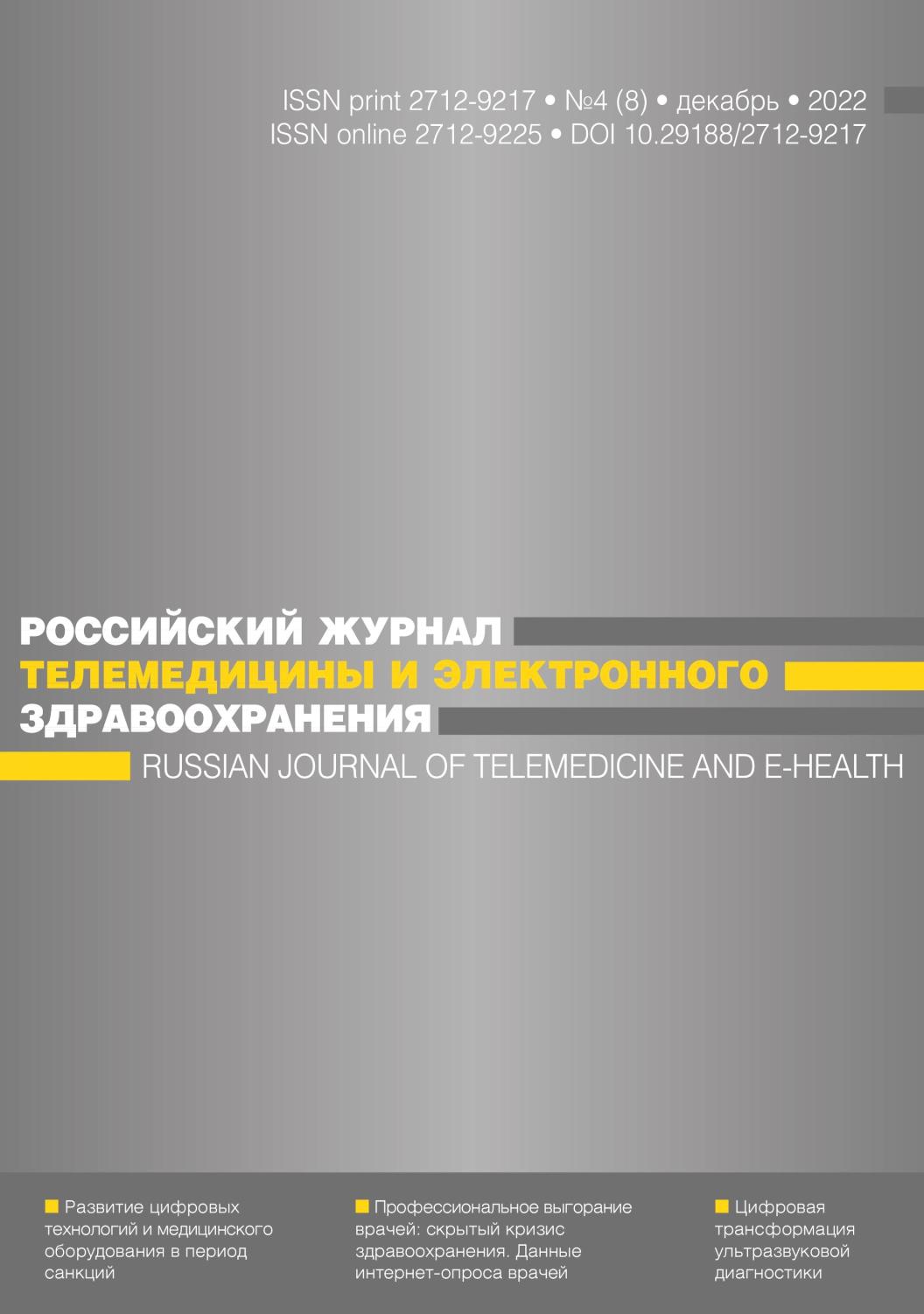


Number №4, 2025
Legal Sovereignty of the Individual in Digital Healthcare in the Era of Artificial Intelligence
Number №3, 2025
Digital Health: Forecast for 2025-2030
Number №2, 2025
Digital technologies in remote monitoring of childbirth with a Clinical decision support system (CDSS)
Number №1, 2025
Digital technologies for health promotion and disease prevention in older adults
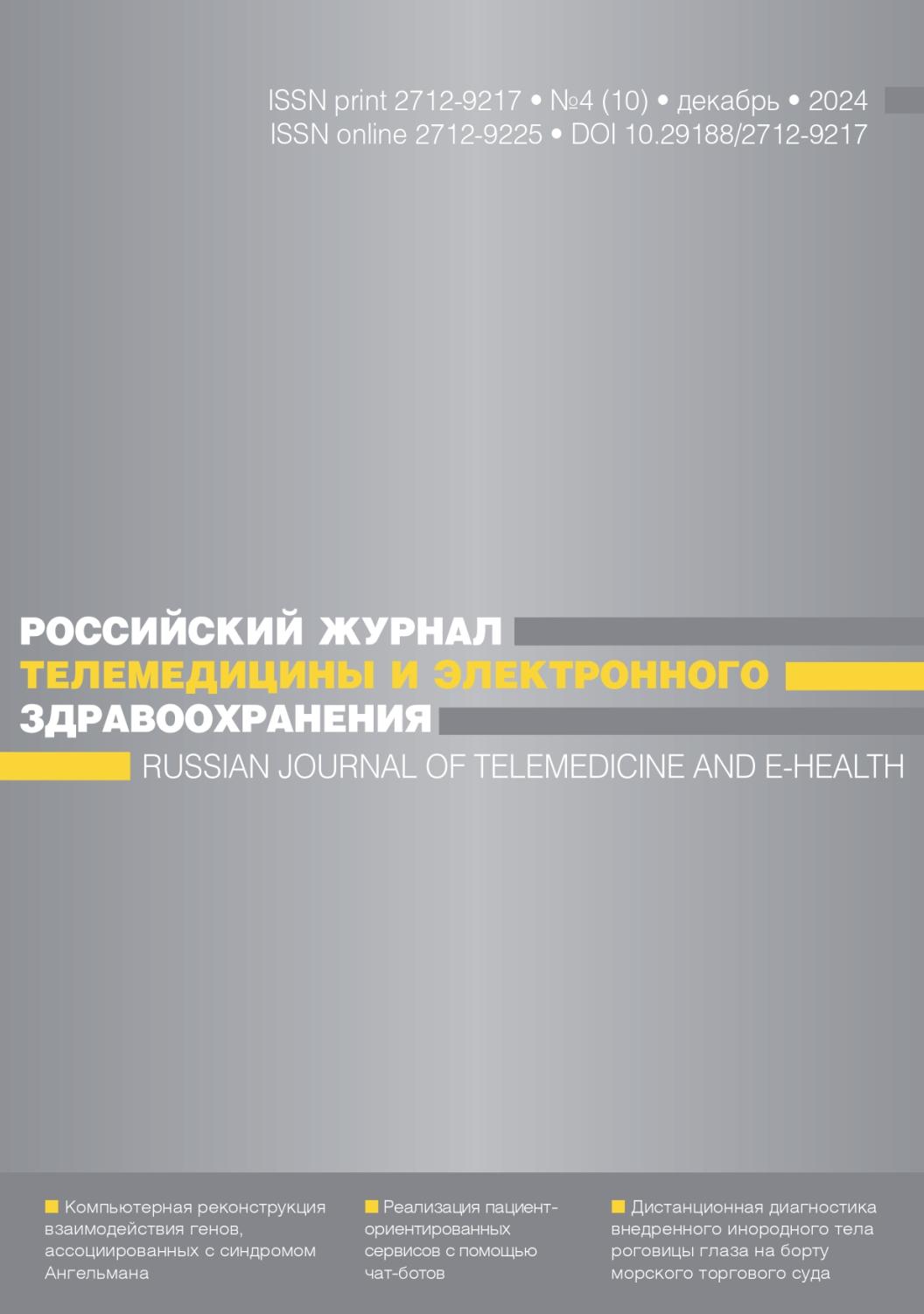
Number №4, 2024
Computer reconstruction of the interaction of genes associated with Angelman syndrome
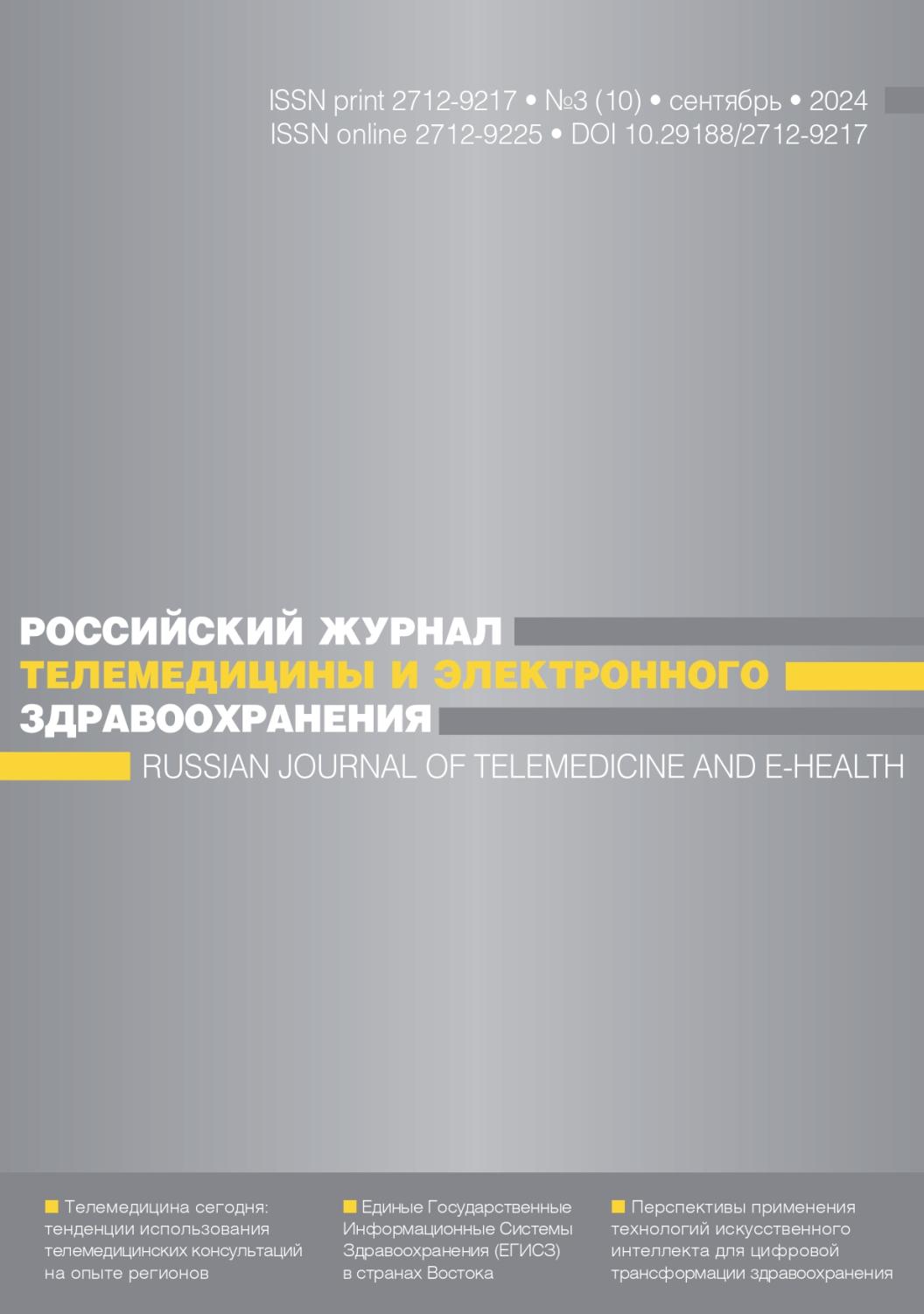
Number №3, 2024
Telemedicine today: trends in the use of telemedicine consultations based on regional experience
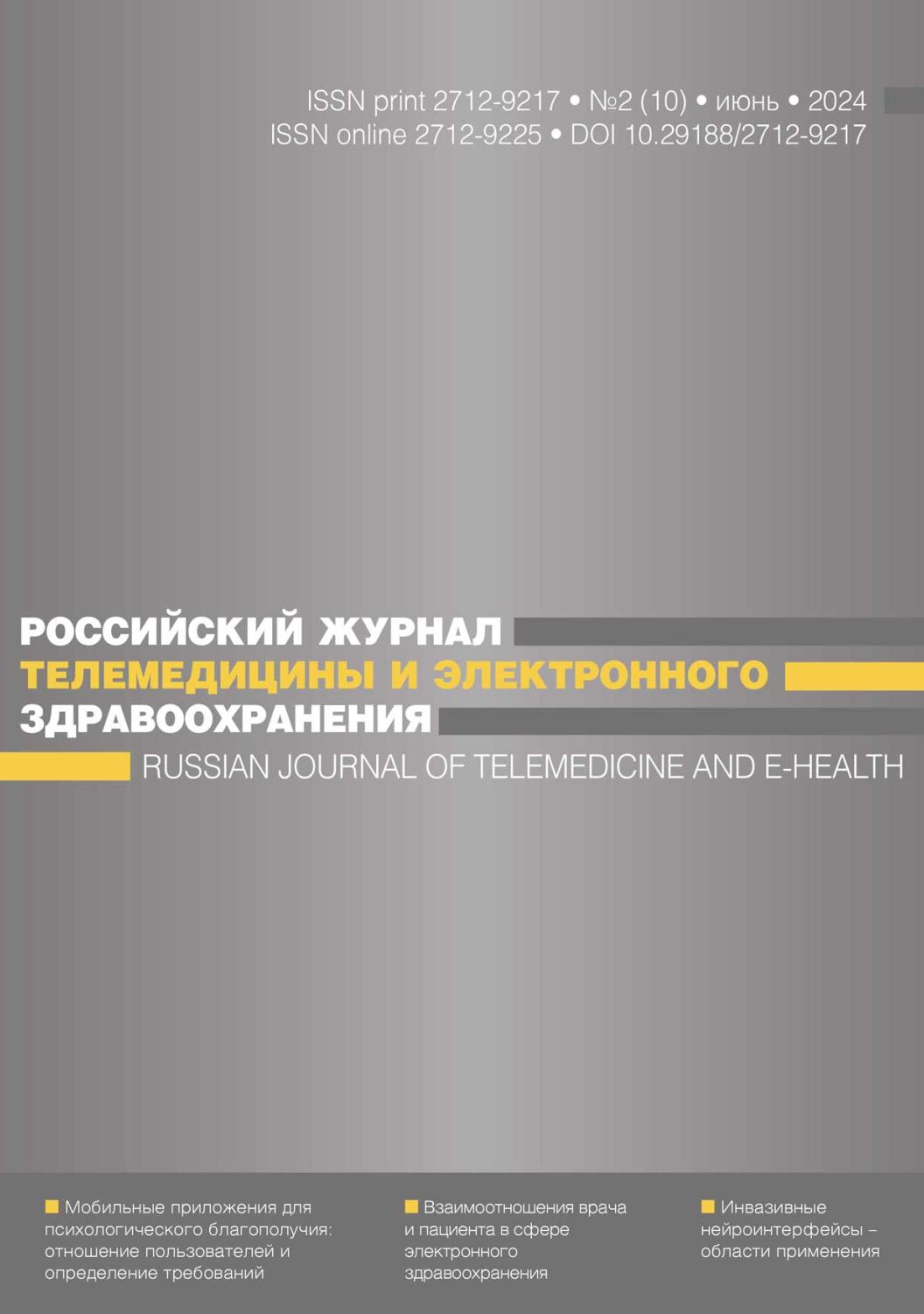
Number №2, 2024
Mobile apps for psychological well-being: user attitudes and definition of requirements
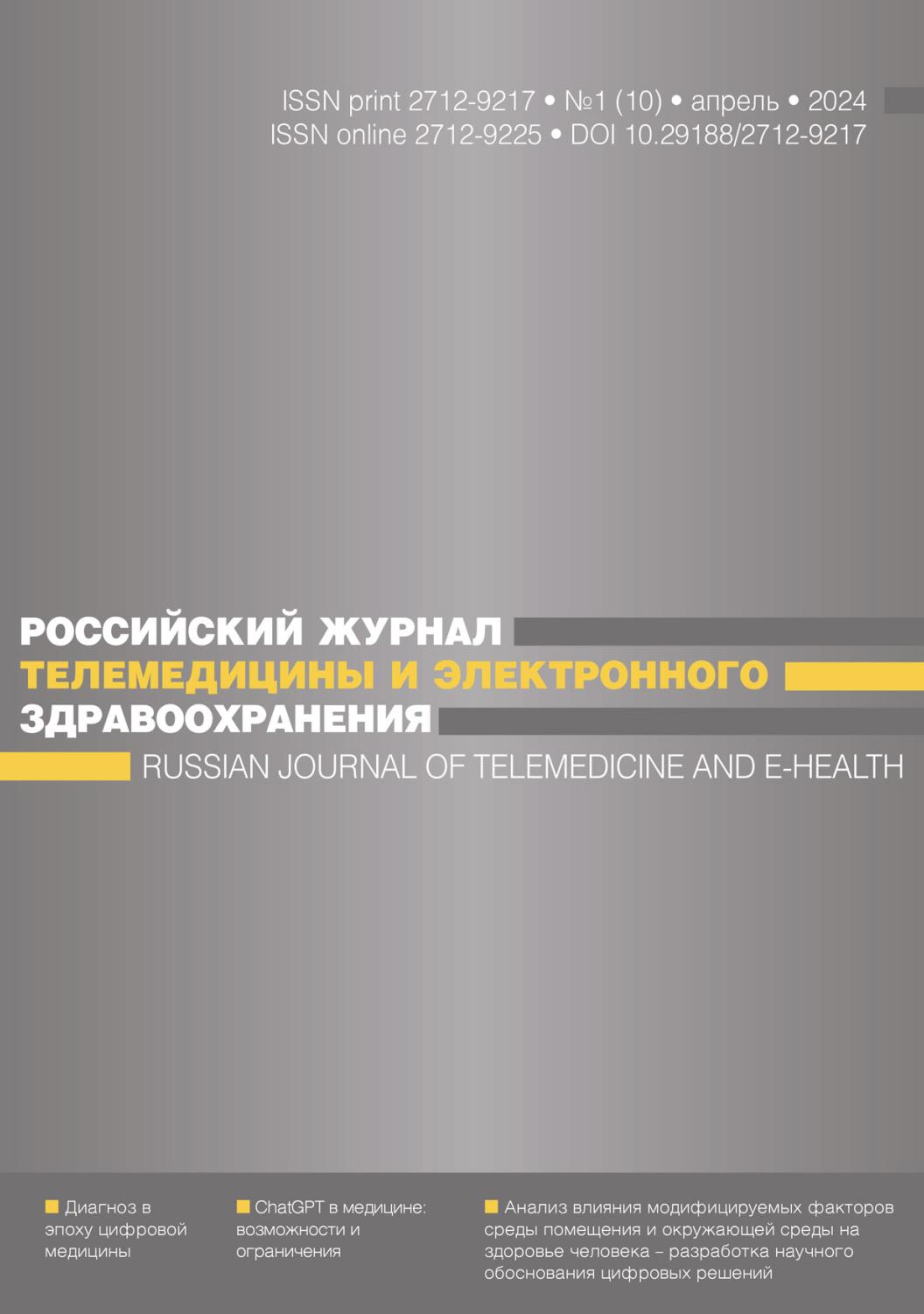
Number №1, 2024
Diagnosis in the era of digital medicine
Number №4, 2023
Artificial intelligence in Russian healthcare: collecting and preparing data for machine learning
Number №3, 2023
China as a supplier of medical equipment in the Russian Federation. Options for cooperation and features of working with Chinese suppliers
Number №2, 2023
Experience in teaching telemedicine in the system of higher professional education The attitude of medical workers to telemedicine technologies
Number №4, 2022
Physician burnout: the hidden healthcare crisis. Results of an online survey of doctors
Number №3, 2022
Interaction of clinical and diagnostic medicine. Results of an online survey of doctors
Number №2, 2022
Mobile applications for mental health self-management: a review of customers’ opinions Ultrasound robots: ready-to-use solutions and perspective directions
Number №1, 2022
Digital transformation of the pathological service as a way to improve the quality of medical care
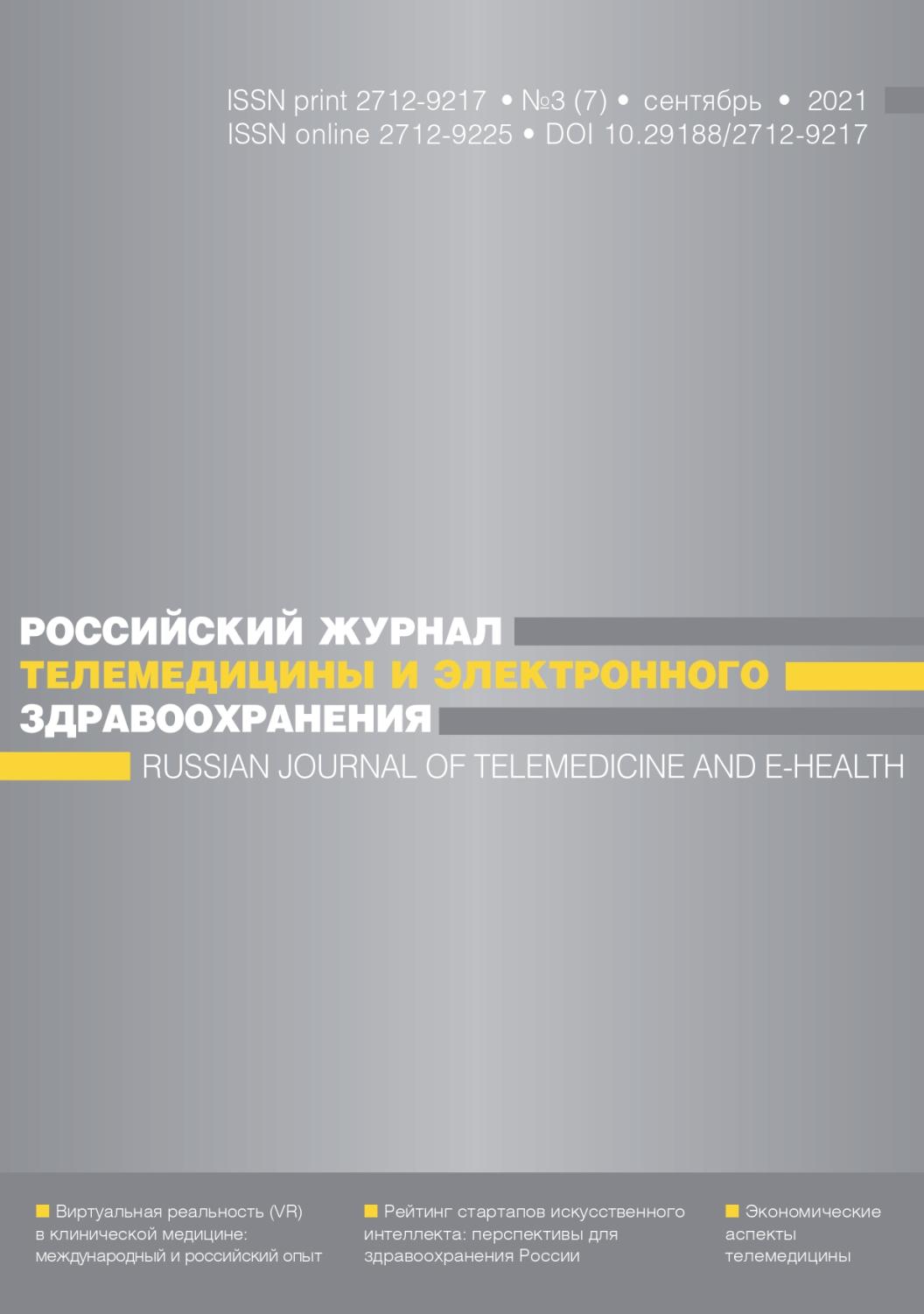
Number №4, 2021
Clinical guidelines of the Ministry of Health of the Russian Federation: are doctors ready to follow them? Results of an online survey of doctors.
Number №3, 2021
Виртуальная реальность (VR) в клинической медицине: международный и российский опыт
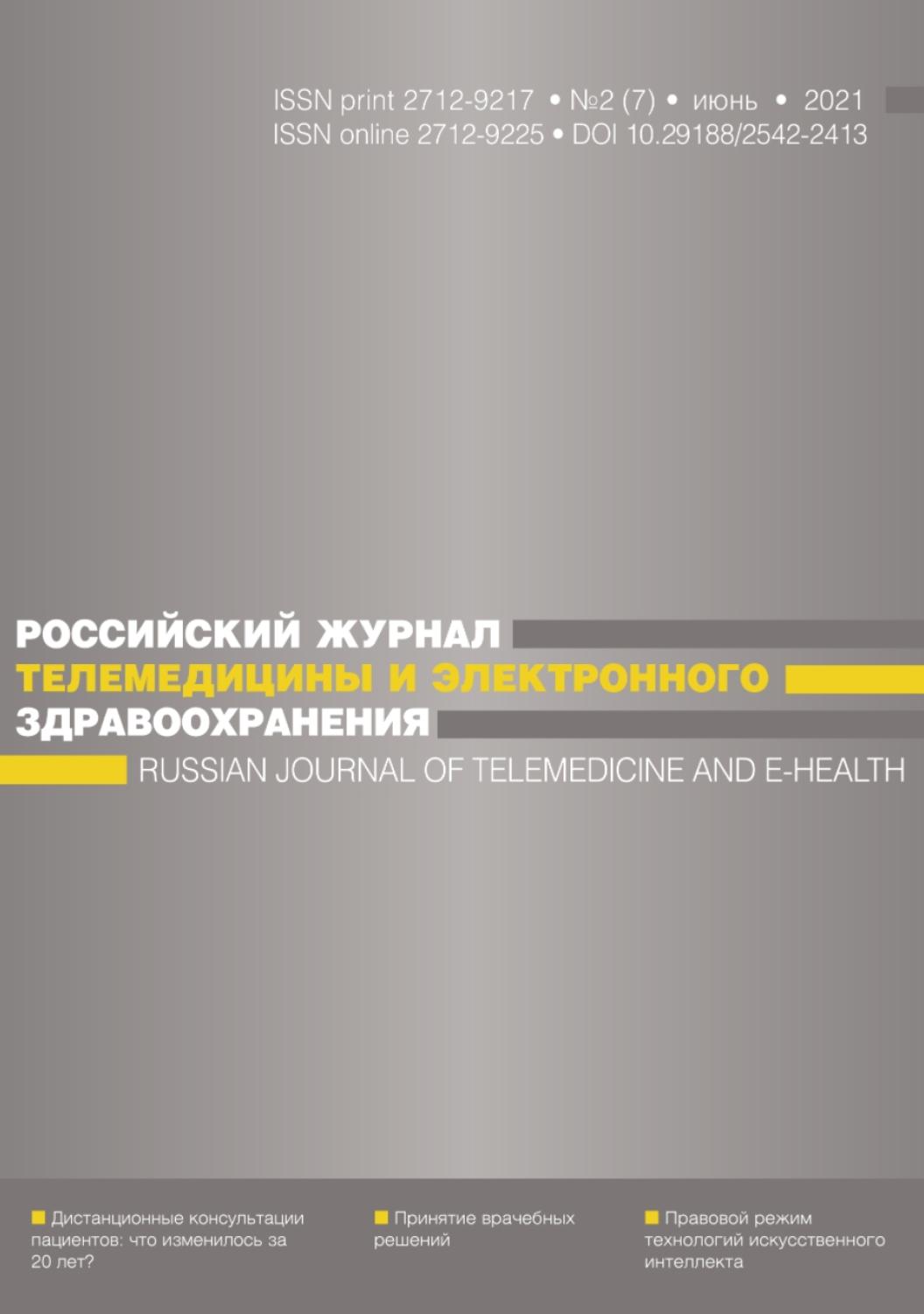
Number №2, 2021
Дистанционные консультации пациентов: что изменилось за 20 лет?
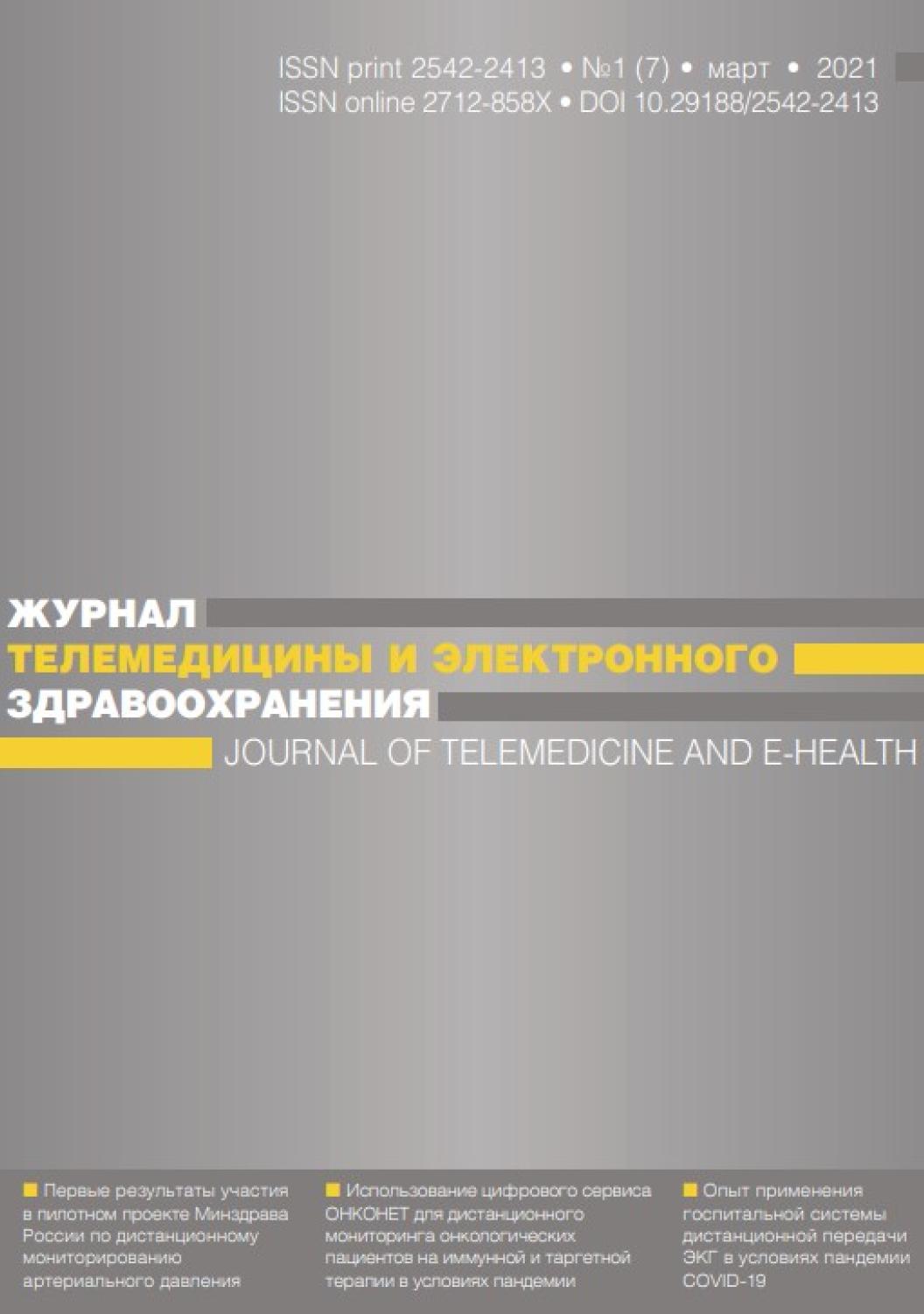
Number №1, 2021
Experience of participation in the blood pressure telemonitoring pilot project of the Ministry of Healthcare
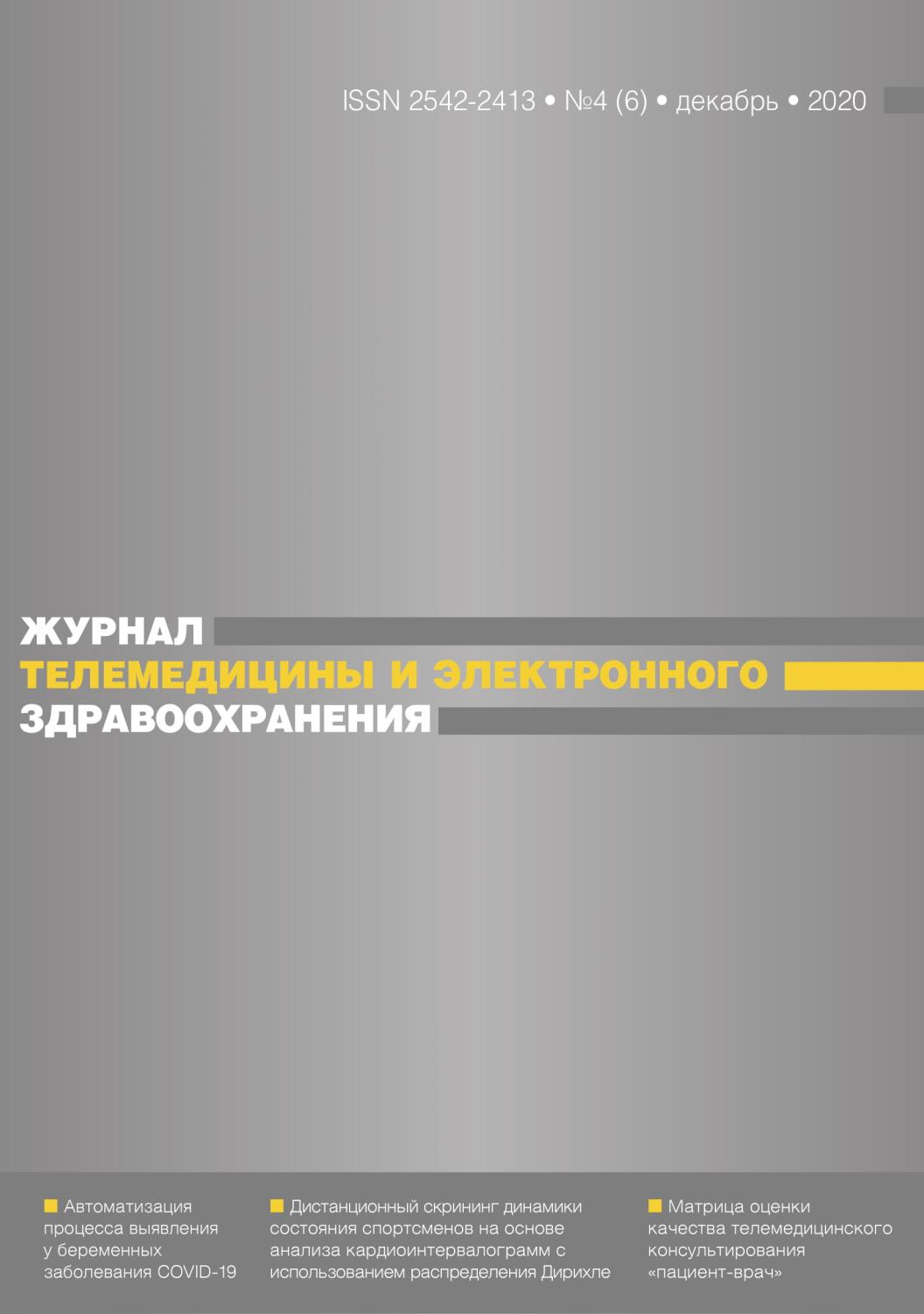
Number №4, 2020
Автоматизация процесса выявления у беременных заболевания COVID-19
Number №3, 2020
Remote cognitive behavioral therapy for stress disorder associated with the COVID-19 pandemic
Number №2, 2020
Distance education at a medical school during the COVID-19 pandemic: the first experience through the eyes of students
Number №1-2, 2018
Ответственность при использовании телемедицины: врач или юрист Скрининг меланомы: искусственный интеллект, mHealth и теледерматология
Number №3, 2018 год
II Всероссийский форум по телемедицине, цифровизации здравоохранения и медицинскому маркетингу «ТЕЛЕМЕДФОРУМ 2019» Эффективность телемедицинских консультаций «пациент-врач» Телереабилитация: рандомизированное исследование исходов
Number №1-2, 2019
Роль искусственного интеллекта в медицине Информационная система поддержки принятия врачебных решений
Number №1, 2020
Technologies for continuous monitoring of blood pressure: prospects for practical application Telemedicine technologies in the Chinese army
Number №2, 2017
Primary telemedicine consultation "patient-doctor": first systematization of methodology
Number №1, 2017
1. A systematic review of using Internet messengers in telemedicine 2. Telemedicine and social networks in the fight against drug addiction
Number №1, 2016
1. The Experience of the Telehealth Network of Minas Gerais, Brazil 2. The Remote Monitoring of Patients with Congestive Heart Failure:The Organizational Impact..
Number №1, 2015
Teleassessment for diagnosis and treatment in urology Efficiency of telemedicine at the northern regions Russian Federation A.L. Tsaregorodtsev

Automated Diet and Activity Monitoring for Intelligent Lifestyle Optimization

Maged N. Kamel Boulos
11103
Download PDF

User compliance and adherence with current diet and exercise management apps is generally poor, as these apps require an extensive deal of thorough manual inputting, logging and (often inaccurate/incomplete) estimation of daily food and drink intake and physical activity/exercise types/duration undertaken by users. In ADAMILO, we are proposing a one-stop, comprehensive P4 (predictive, preventive, personalised and participatory [person-centred]) solution, integrating novel, almost fully automated (but still very reliable and accurate) monitoring and logging of:

Calorie composition and intake (ingested foods and drinks, triangulating NIR spectroscopy and other methods), and Calorie expenditure (physical activity/exercise segmentation, calibrated by indirect calorimetry, the gold standard in energy expenditure estimation), with intelligent, cloud-based decision support (DSS) for lifestyle (diet and exercise) optimisation, that can be used by a layperson on his/her own and is tailored per individual needs, age, comorbidity, etc.

The DSS acts on real-time user data, covering lifestyle, diet, activity, body weight, blood pressure, self-efficacy, and other parameters. The DSS will use the best existing, validated, computer/digital clinical cardio-metabolic predictive risks models and algorithms and will continuously update the user's risk levels based on the person's real-time data and any preventive active lifestyle modification actions s/he is undertaking based on ADAMILO's tailored recommendations. ADAMILO's recommendations will be flexible and user-negotiable (using clinically-validated methods such as the Dynamic Diet software algorithms), thus further enhancing user's compliance and adherence. Extensive use will be made of captology and gamification techniques, including the use of social networked games/exergames and of an optional novel sociable, mini-robot coach interface to ensure adherence and sustainable positive lifestyle changes without relapse.
 

Conflict of interest. The author declare no conflict of interest

Attachment Size
Download 313.37 KB
Keywords: mHealth, obesity, overweight, lifestyle, diet