




Number №4, 2025
Legal Sovereignty of the Individual in Digital Healthcare in the Era of Artificial Intelligence
Number №3, 2025
Digital Health: Forecast for 2025-2030
Number №2, 2025
Digital technologies in remote monitoring of childbirth with a Clinical decision support system (CDSS)
Number №1, 2025
Digital technologies for health promotion and disease prevention in older adults
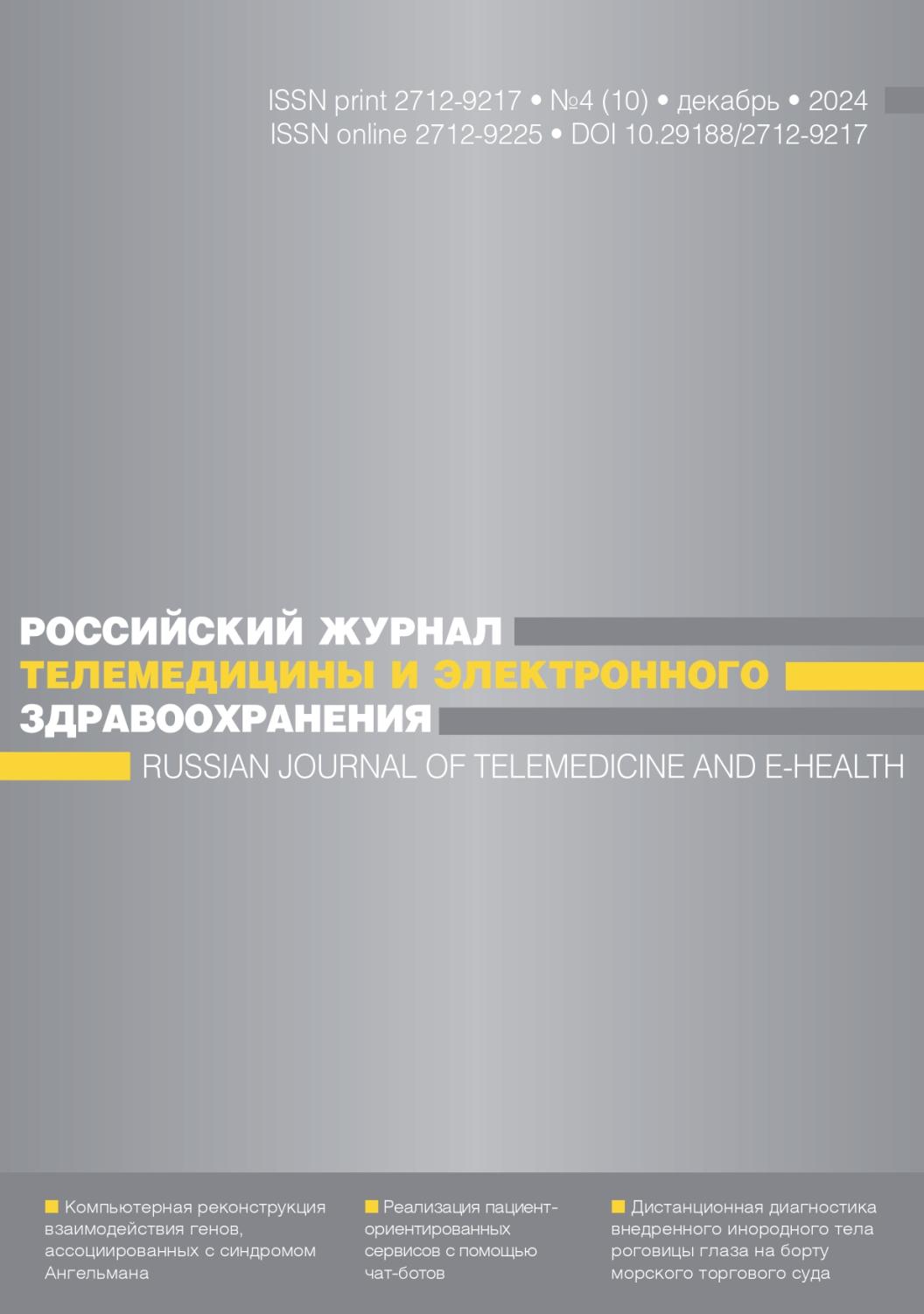
Number №4, 2024
Computer reconstruction of the interaction of genes associated with Angelman syndrome
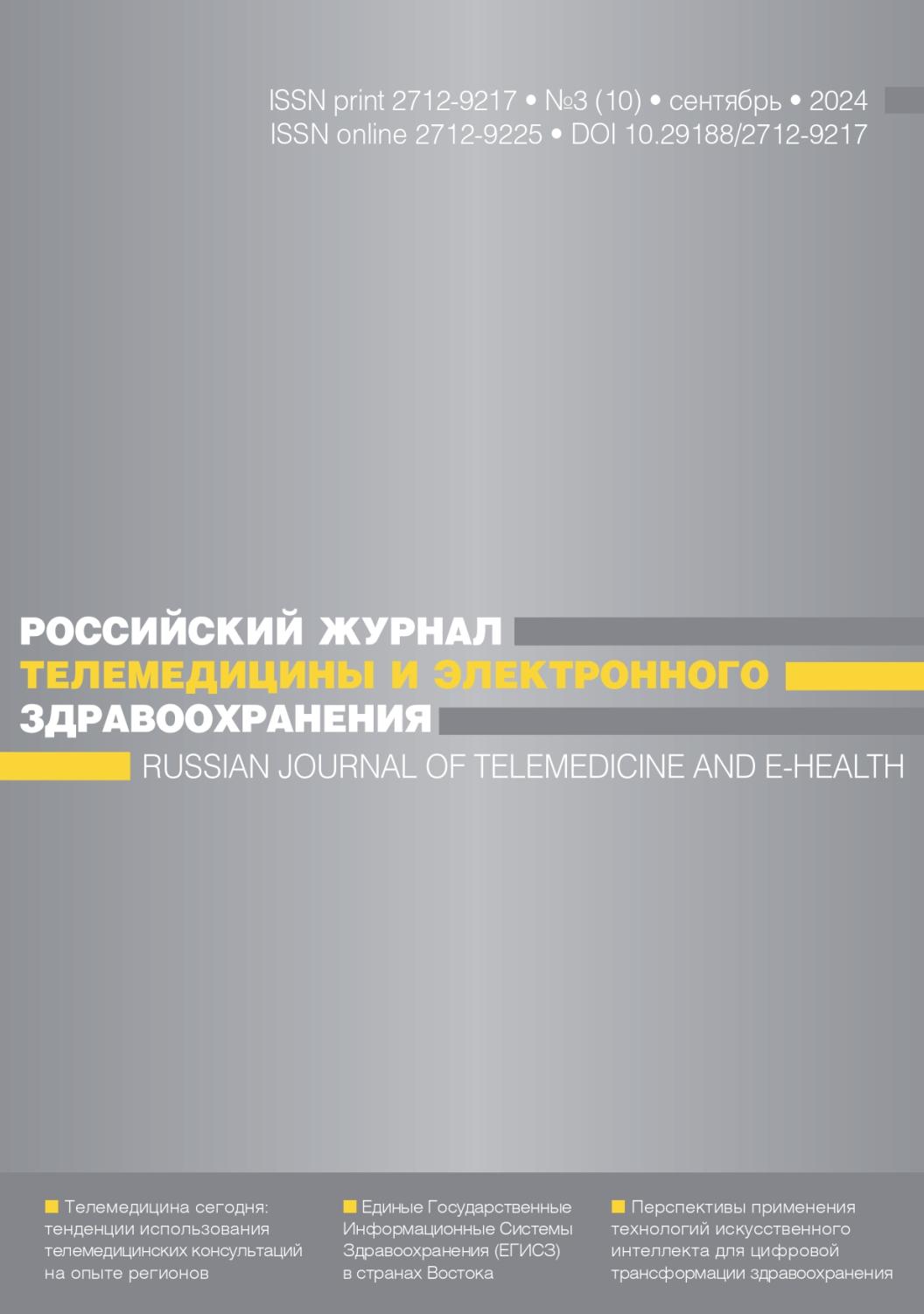
Number №3, 2024
Telemedicine today: trends in the use of telemedicine consultations based on regional experience
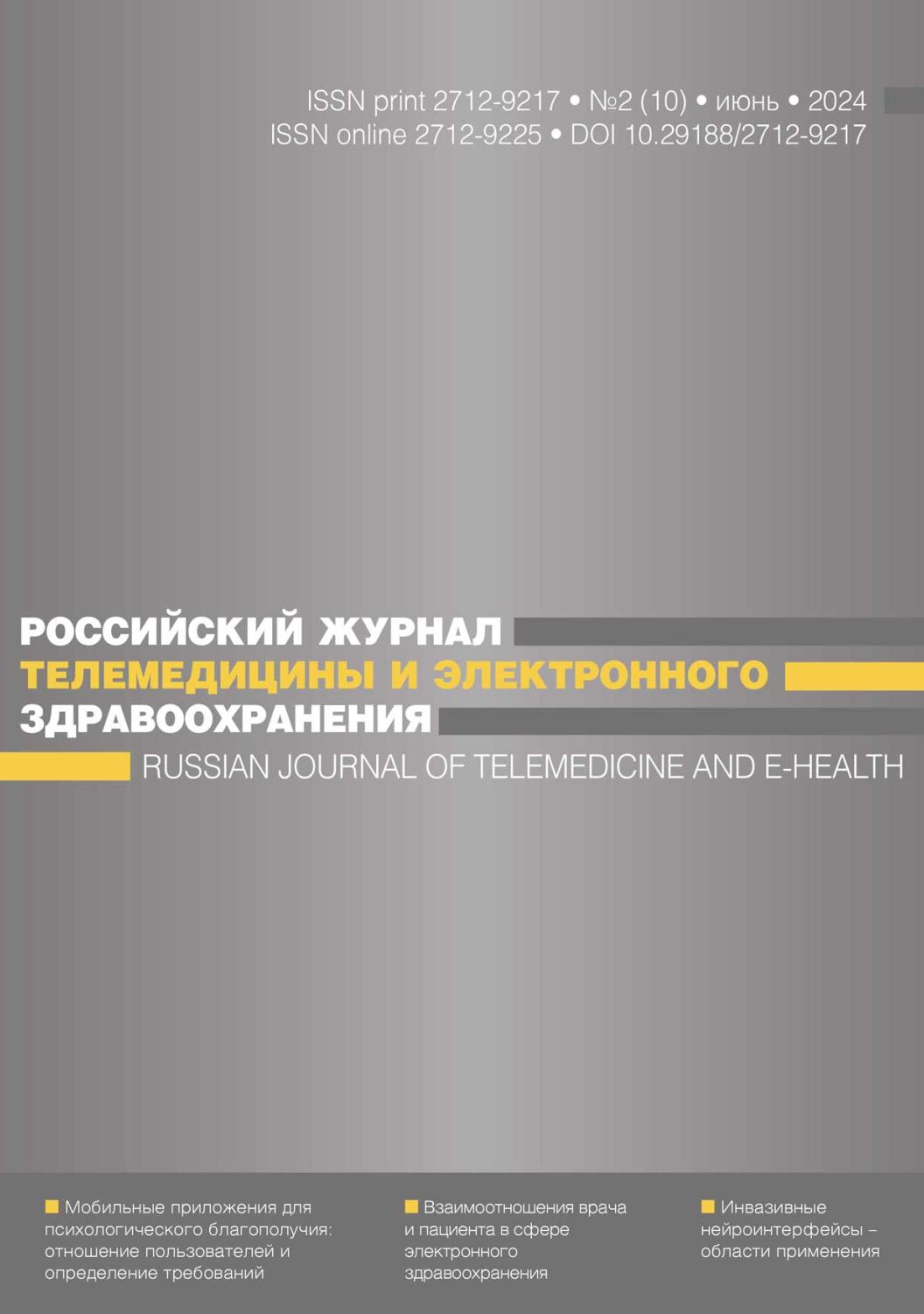
Number №2, 2024
Mobile apps for psychological well-being: user attitudes and definition of requirements
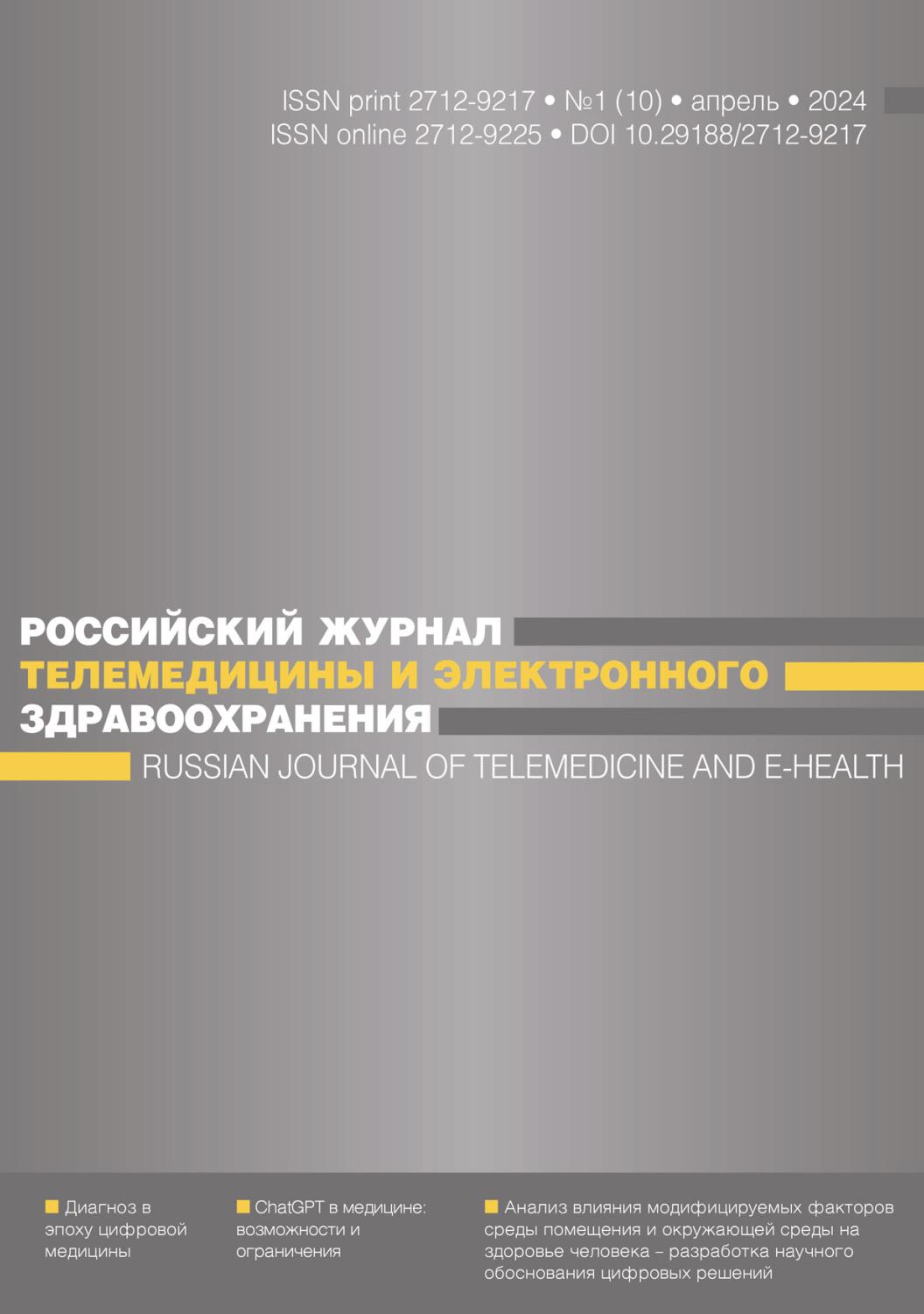
Number №1, 2024
Diagnosis in the era of digital medicine
Number №4, 2023
Artificial intelligence in Russian healthcare: collecting and preparing data for machine learning
Number №3, 2023
China as a supplier of medical equipment in the Russian Federation. Options for cooperation and features of working with Chinese suppliers
Number №2, 2023
Experience in teaching telemedicine in the system of higher professional education The attitude of medical workers to telemedicine technologies
Number №4, 2022
Physician burnout: the hidden healthcare crisis. Results of an online survey of doctors
Number №3, 2022
Interaction of clinical and diagnostic medicine. Results of an online survey of doctors
Number №2, 2022
Mobile applications for mental health self-management: a review of customers’ opinions Ultrasound robots: ready-to-use solutions and perspective directions
Number №1, 2022
Digital transformation of the pathological service as a way to improve the quality of medical care
Number №4, 2021
Clinical guidelines of the Ministry of Health of the Russian Federation: are doctors ready to follow them? Results of an online survey of doctors.
Number №3, 2021
Виртуальная реальность (VR) в клинической медицине: международный и российский опыт
Number №2, 2021
Дистанционные консультации пациентов: что изменилось за 20 лет?
Number №1, 2021
Experience of participation in the blood pressure telemonitoring pilot project of the Ministry of Healthcare
Number №4, 2020
Автоматизация процесса выявления у беременных заболевания COVID-19
Number №3, 2020
Remote cognitive behavioral therapy for stress disorder associated with the COVID-19 pandemic
Number №2, 2020
Distance education at a medical school during the COVID-19 pandemic: the first experience through the eyes of students
Number №1-2, 2018
Ответственность при использовании телемедицины: врач или юрист Скрининг меланомы: искусственный интеллект, mHealth и теледерматология
Number №3, 2018 год
II Всероссийский форум по телемедицине, цифровизации здравоохранения и медицинскому маркетингу «ТЕЛЕМЕДФОРУМ 2019» Эффективность телемедицинских консультаций «пациент-врач» Телереабилитация: рандомизированное исследование исходов
Number №1-2, 2019
Роль искусственного интеллекта в медицине Информационная система поддержки принятия врачебных решений
Number №1, 2020
Technologies for continuous monitoring of blood pressure: prospects for practical application Telemedicine technologies in the Chinese army
Number №2, 2017
Primary telemedicine consultation "patient-doctor": first systematization of methodology
Number №1, 2017
1. A systematic review of using Internet messengers in telemedicine 2. Telemedicine and social networks in the fight against drug addiction
Number №1, 2016
1. The Experience of the Telehealth Network of Minas Gerais, Brazil 2. The Remote Monitoring of Patients with Congestive Heart Failure:The Organizational Impact..
Number №1, 2015
Teleassessment for diagnosis and treatment in urology Efficiency of telemedicine at the northern regions Russian Federation A.L. Tsaregorodtsev

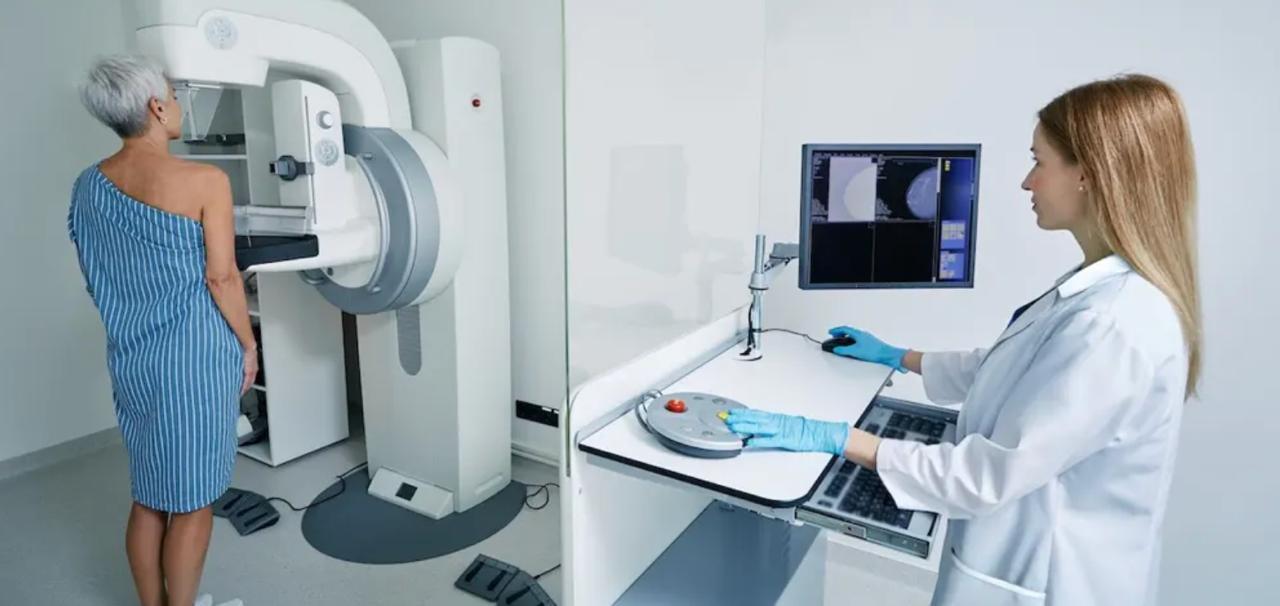
AI в маммографии: первые итоги рандомизированного исследования MASAI

Submitted by admin on Thu, 02/12/2026 - 09:03
1

Результаты масштабного исследования в Швеции (свыше 100 000 участниц) подтвердили: ИИ не просто помогает врачам, а реально меняет прогноз для пациентов.

Это первое рандомизированное контролируемое испытание такого уровня.

Главные цифры исследования:

📊 –12% "запущенных" раков. Это опухоли, которые обычно «пропускаются» на скрининге и обнаруживаются уже в запущенной форме между раундами обследования. 
📊 –27% агрессивных подтипов. ИИ лучше выявляет опасные формы рака на ранней стадии. 
📊 –44% нагрузки на радиалогов. Система фильтрует снимки: низкорисковые передаются на чтение одному врачу, подозрительные — сразу двоим. 
📊 +29% к выявляемости. При этом количество ложноположительных результатов не выросло.

ИИ-система (обученная на 200 000 кейсов из 10 стран) выступает в роли «триаж-менеджера». Она подсвечивает подозрительные зоны, позволяя врачам фокусироваться на сложных случаях. В группе с ИИ 81% опухолей были найдены именно во время скрининга (против 74% в контрольной группе).

❌ Исследователи из Лундского университета подчеркивают: ИИ не заменяет врача. Как минимум один радиолог всё еще необходим для финального решения. Однако технология позволяет сократить очереди и сосредоточиться на клинически значимых случаях.

Новость подготовлена командой jTeleMed