


Number №4, 2025
Legal Sovereignty of the Individual in Digital Healthcare in the Era of Artificial Intelligence
Number №3, 2025
Digital Health: Forecast for 2025-2030
Number №2, 2025
Digital technologies in remote monitoring of childbirth with a Clinical decision support system (CDSS)
Number №1, 2025
Digital technologies for health promotion and disease prevention in older adults
Number №4, 2024
Computer reconstruction of the interaction of genes associated with Angelman syndrome
Number №3, 2024
Telemedicine today: trends in the use of telemedicine consultations based on regional experience
Number №2, 2024
Mobile apps for psychological well-being: user attitudes and definition of requirements
Number №1, 2024
Diagnosis in the era of digital medicine
Number №4, 2023
Artificial intelligence in Russian healthcare: collecting and preparing data for machine learning
Number №3, 2023
China as a supplier of medical equipment in the Russian Federation. Options for cooperation and features of working with Chinese suppliers
Number №2, 2023
Experience in teaching telemedicine in the system of higher professional education The attitude of medical workers to telemedicine technologies
Number №4, 2022
Physician burnout: the hidden healthcare crisis. Results of an online survey of doctors
Number №3, 2022
Interaction of clinical and diagnostic medicine. Results of an online survey of doctors
Number №2, 2022
Mobile applications for mental health self-management: a review of customers’ opinions Ultrasound robots: ready-to-use solutions and perspective directions
Number №1, 2022
Digital transformation of the pathological service as a way to improve the quality of medical care
Number №4, 2021
Clinical guidelines of the Ministry of Health of the Russian Federation: are doctors ready to follow them? Results of an online survey of doctors.
Number №3, 2021
Виртуальная реальность (VR) в клинической медицине: международный и российский опыт
Number №2, 2021
Дистанционные консультации пациентов: что изменилось за 20 лет?
Number №1, 2021
Experience of participation in the blood pressure telemonitoring pilot project of the Ministry of Healthcare
Number №4, 2020
Автоматизация процесса выявления у беременных заболевания COVID-19
Number №3, 2020
Remote cognitive behavioral therapy for stress disorder associated with the COVID-19 pandemic
Number №2, 2020
Distance education at a medical school during the COVID-19 pandemic: the first experience through the eyes of students
Number №1-2, 2018
Ответственность при использовании телемедицины: врач или юрист Скрининг меланомы: искусственный интеллект, mHealth и теледерматология
Number №3, 2018 год
II Всероссийский форум по телемедицине, цифровизации здравоохранения и медицинскому маркетингу «ТЕЛЕМЕДФОРУМ 2019» Эффективность телемедицинских консультаций «пациент-врач» Телереабилитация: рандомизированное исследование исходов
Number №1-2, 2019
Роль искусственного интеллекта в медицине Информационная система поддержки принятия врачебных решений
Number №1, 2020
Technologies for continuous monitoring of blood pressure: prospects for practical application Telemedicine technologies in the Chinese army
Number №2, 2017
Primary telemedicine consultation "patient-doctor": first systematization of methodology
Number №1, 2017
1. A systematic review of using Internet messengers in telemedicine 2. Telemedicine and social networks in the fight against drug addiction
Number №1, 2016
1. The Experience of the Telehealth Network of Minas Gerais, Brazil 2. The Remote Monitoring of Patients with Congestive Heart Failure:The Organizational Impact..
Number №1, 2015
Teleassessment for diagnosis and treatment in urology Efficiency of telemedicine at the northern regions Russian Federation A.L. Tsaregorodtsev

Телехирургия: первое рандомизированное исследование

Submitted by admin on Fri, 02/13/2026 - 09:24
3

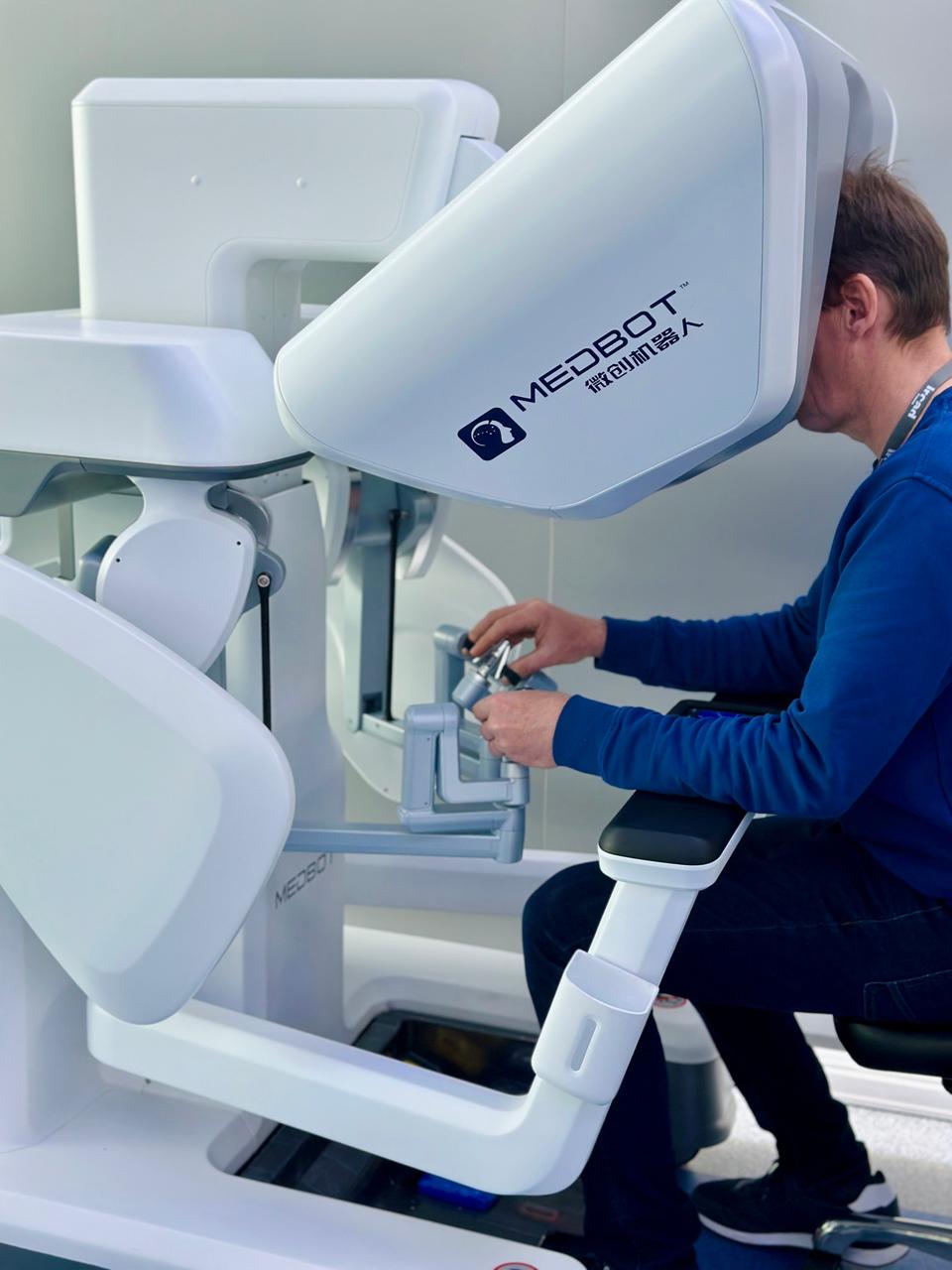
Дистанционные операции на расстоянии тысяч километров так же надежны, как и обычные робот-ассистированные вмешательства, когда врач и пациент находятся в одной операционной. К такому выводу пришли ученые из Китая в первом в истории рандомизированном контролируемом исследовании (РКИ) в этой области.

Основные факты исследования (BMJ):

➡️ 72 пациента с опухолями почек или раком простаты. 
➡️  Которым были выполнены радикальная простатэктомия и резекция почки. 
➡️  Система стабильно работала на дистанциях от 1 000 до 2 800 км. 
➡️  Успех телехирургии сопоставим с локальными операциями (разница всего 0,02).

↗️ Помимо технической стабильности связи, эксперты сравнивали время операции, объем кровопотери, частоту осложнений и сроки восстановления. Ни по одному из этих параметров значимых различий между группами не обнаружено. Команда хирургов (каждый с опытом более 500 операций) отметила, что рабочая нагрузка при телехирургии не возрастает.

Хотя технология развивается более 30 лет, именно сейчас она переходит из разряда «экспериментов» в доказательную медицину.

➡️  В 2024 году уже проводились операции на расстоянии 8 000 км (Бордо — Пекин) с задержкой сигнала всего 132 мс. 
➡️  В Бельгии успешно применяют систему Toumai, получившую CE-сертификацию в Европе.

Несмотря на технологический триумф, авторы подчеркивают: главными барьерами остаются вопросы стоимости, кибербезопасности и доверия пациентов, которые пока с осторожностью относятся к концепции цифровой хирургии.

Новость подготовлена командой jTeleMed