
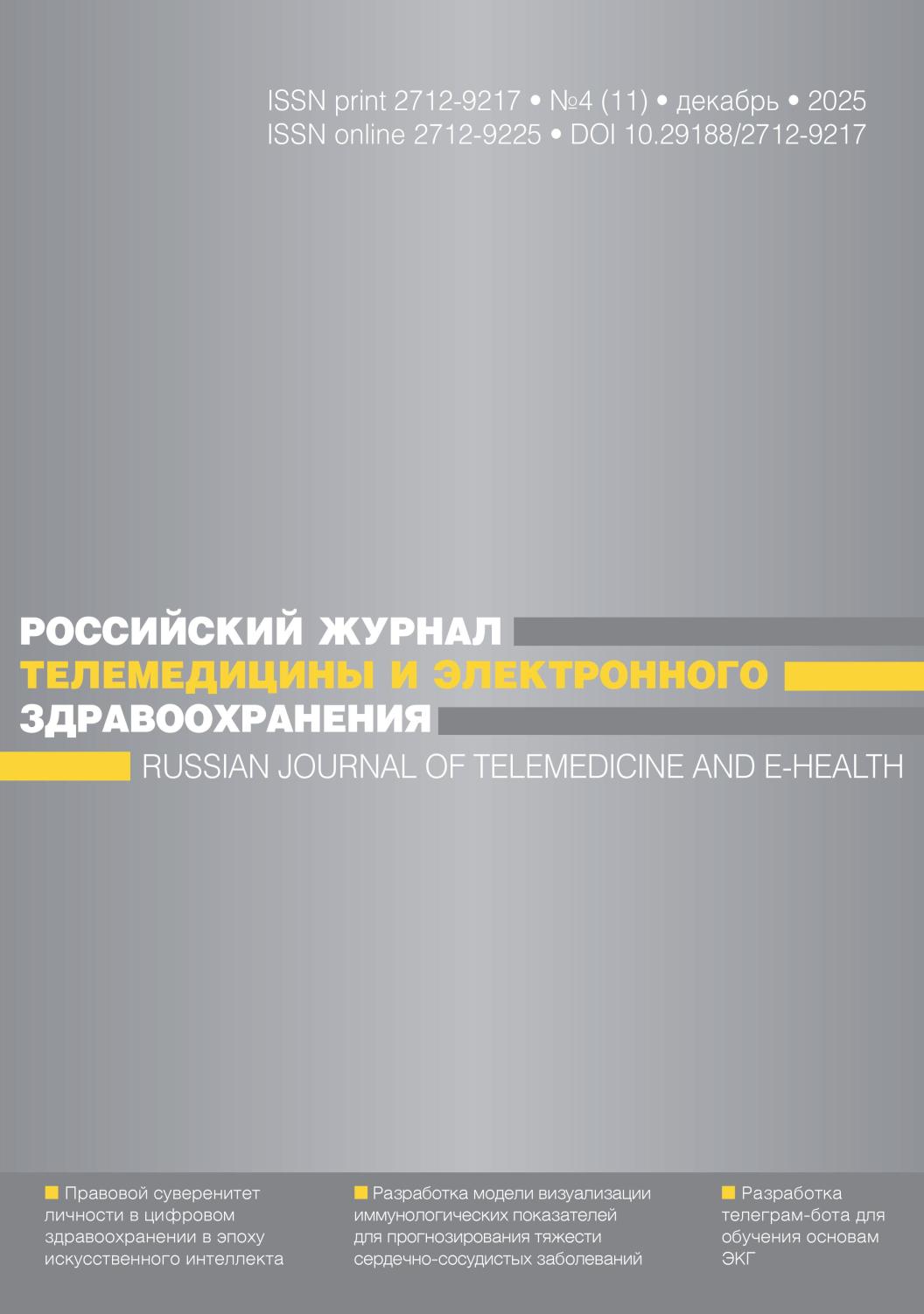



Number №4, 2025
Legal Sovereignty of the Individual in Digital Healthcare in the Era of Artificial Intelligence
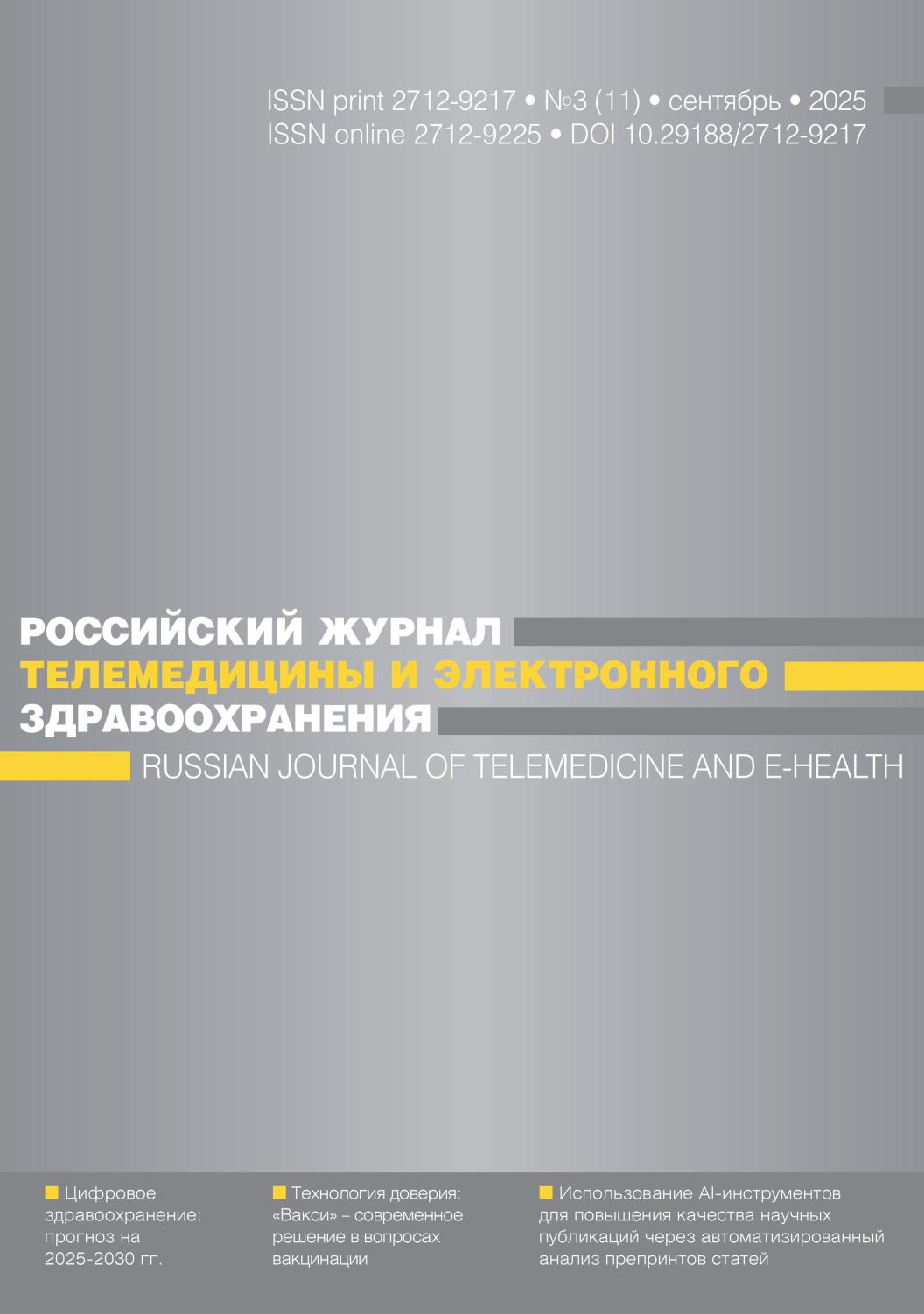
Number №3, 2025
Digital Health: Forecast for 2025-2030
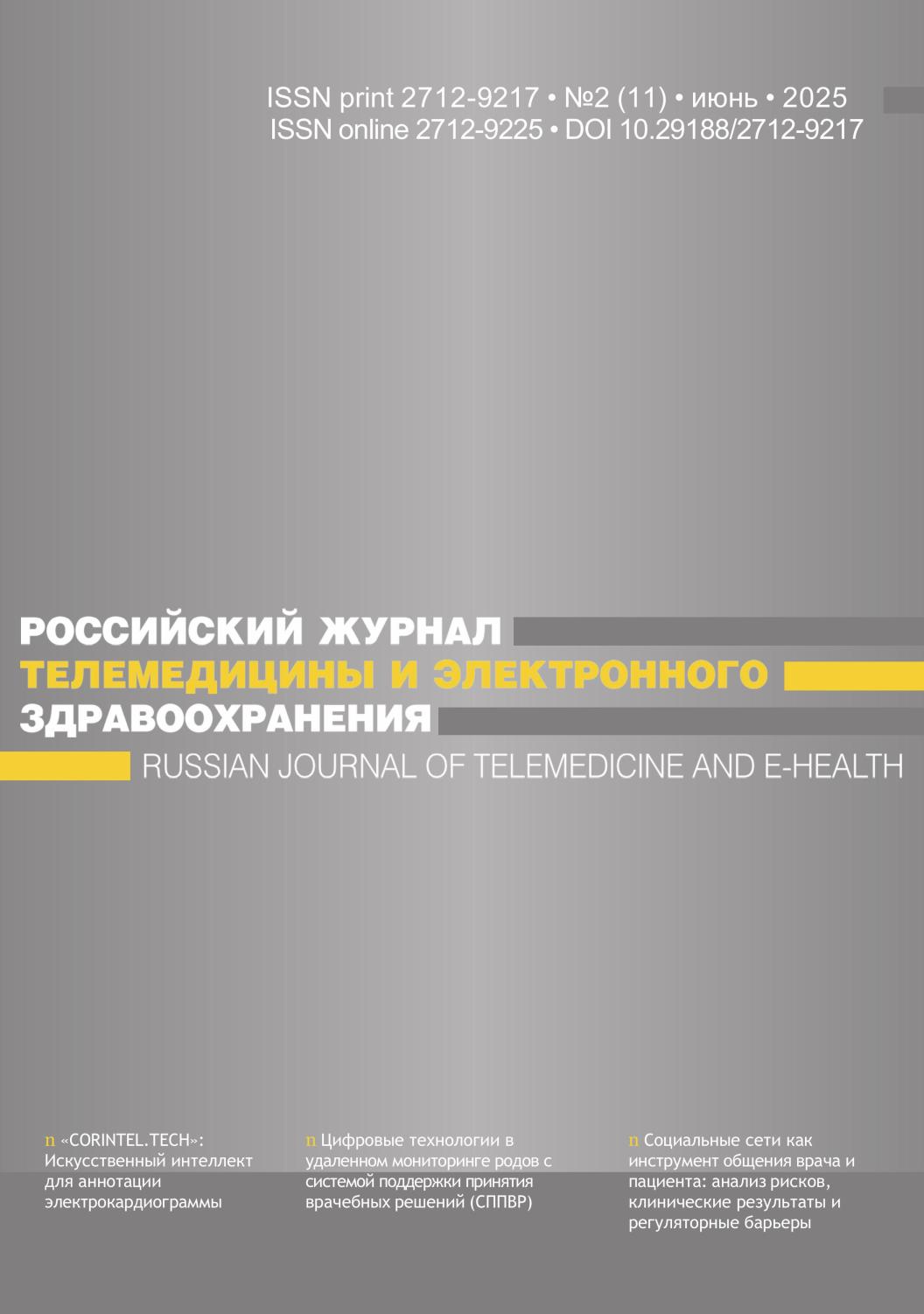
Number №2, 2025
Digital technologies in remote monitoring of childbirth with a Clinical decision support system (CDSS)
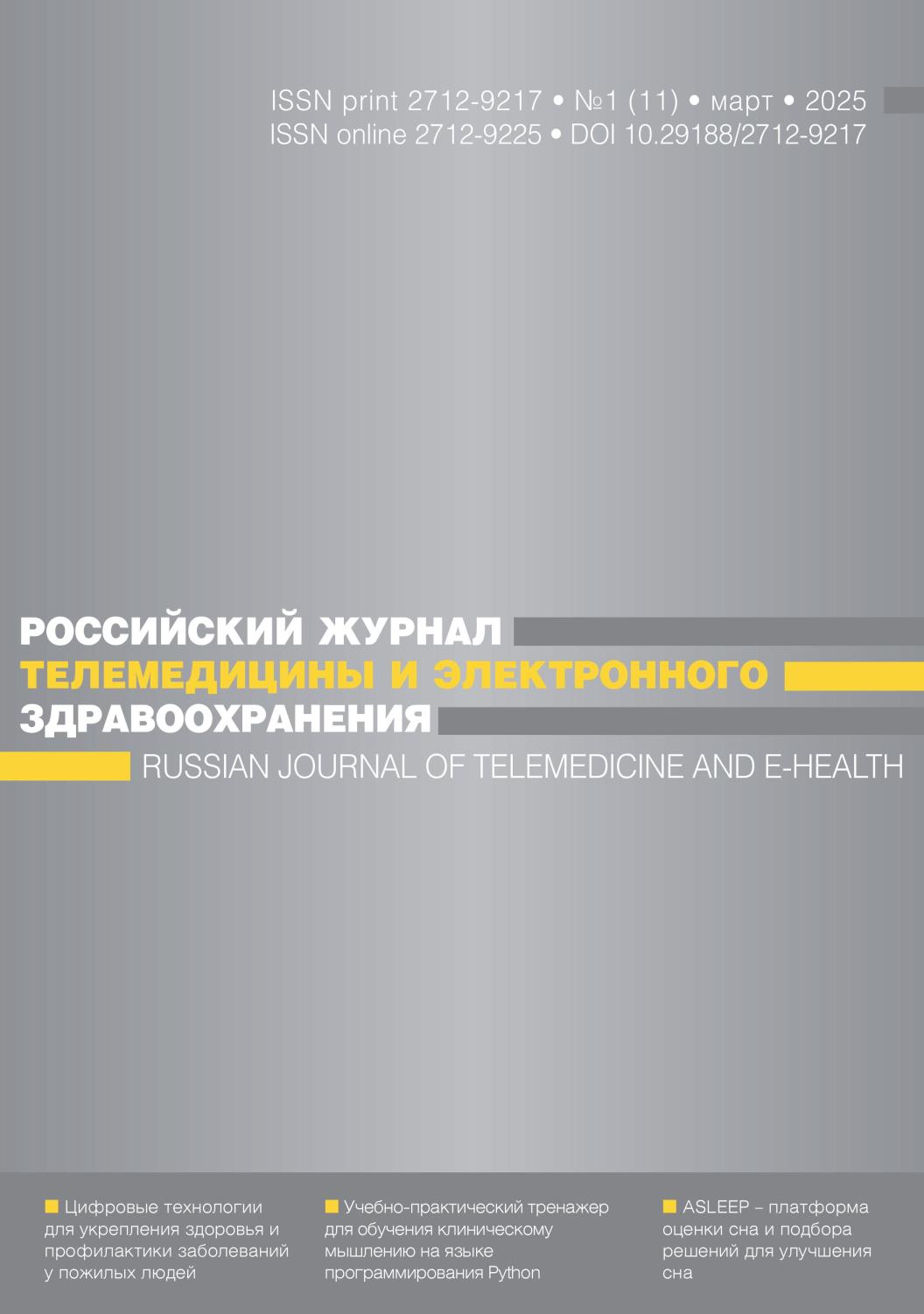
Number №1, 2025
Digital technologies for health promotion and disease prevention in older adults
Number №4, 2024
Computer reconstruction of the interaction of genes associated with Angelman syndrome
Number №3, 2024
Telemedicine today: trends in the use of telemedicine consultations based on regional experience
Number №2, 2024
Mobile apps for psychological well-being: user attitudes and definition of requirements
Number №1, 2024
Diagnosis in the era of digital medicine
Number №4, 2023
Artificial intelligence in Russian healthcare: collecting and preparing data for machine learning
Number №3, 2023
China as a supplier of medical equipment in the Russian Federation. Options for cooperation and features of working with Chinese suppliers
Number №2, 2023
Experience in teaching telemedicine in the system of higher professional education The attitude of medical workers to telemedicine technologies
Number №4, 2022
Physician burnout: the hidden healthcare crisis. Results of an online survey of doctors
Number №3, 2022
Interaction of clinical and diagnostic medicine. Results of an online survey of doctors
Number №2, 2022
Mobile applications for mental health self-management: a review of customers’ opinions Ultrasound robots: ready-to-use solutions and perspective directions
Number №1, 2022
Digital transformation of the pathological service as a way to improve the quality of medical care
Number №4, 2021
Clinical guidelines of the Ministry of Health of the Russian Federation: are doctors ready to follow them? Results of an online survey of doctors.
Number №3, 2021
Виртуальная реальность (VR) в клинической медицине: международный и российский опыт
Number №2, 2021
Дистанционные консультации пациентов: что изменилось за 20 лет?
Number №1, 2021
Experience of participation in the blood pressure telemonitoring pilot project of the Ministry of Healthcare
Number №4, 2020
Автоматизация процесса выявления у беременных заболевания COVID-19
Number №3, 2020
Remote cognitive behavioral therapy for stress disorder associated with the COVID-19 pandemic
Number №2, 2020
Distance education at a medical school during the COVID-19 pandemic: the first experience through the eyes of students
Number №1-2, 2018
Ответственность при использовании телемедицины: врач или юрист Скрининг меланомы: искусственный интеллект, mHealth и теледерматология
Number №3, 2018 год
II Всероссийский форум по телемедицине, цифровизации здравоохранения и медицинскому маркетингу «ТЕЛЕМЕДФОРУМ 2019» Эффективность телемедицинских консультаций «пациент-врач» Телереабилитация: рандомизированное исследование исходов
Number №1-2, 2019
Роль искусственного интеллекта в медицине Информационная система поддержки принятия врачебных решений
Number №1, 2020
Technologies for continuous monitoring of blood pressure: prospects for practical application Telemedicine technologies in the Chinese army
Number №2, 2017
Primary telemedicine consultation "patient-doctor": first systematization of methodology
Number №1, 2017
1. A systematic review of using Internet messengers in telemedicine 2. Telemedicine and social networks in the fight against drug addiction
Number №1, 2016
1. The Experience of the Telehealth Network of Minas Gerais, Brazil 2. The Remote Monitoring of Patients with Congestive Heart Failure:The Organizational Impact..
Number №1, 2015
Teleassessment for diagnosis and treatment in urology Efficiency of telemedicine at the northern regions Russian Federation A.L. Tsaregorodtsev

Дистанционный мониторинг состояния здоровья и окружающей среды человека: возможности и ограничения

DOI: 10.29188/2712-9217-2022-8-3-45-54
For citation: Шадеркин И.А. Дистанционный мониторинг состояния здоровья и окружающей среды человека: возможности и ограничения. Российский журнал телемедицины и электронного здравоохранения 2022;8(3)45-54; https://doi.org/10.29188/2712-9217-2022-8-3-45-54
Шадеркин И.А.
2356

Дистанционный мониторинг состояния здоровья и окружающей среды человека – это разновидность телемедицинских технологий, которая позволяет отслеживать во времени выбранные показатели здоровья и показатели окружающей среды человека, накапливать эти данные в цифровом виде, передавать на расстоянии для оценки врачом или другим медицинским персоналом динамики состояния здоровья человека с целью принятия клинического решения.

Технологии ДМ являются новым этапом развития ТМТ, и, как любая технология он имеет свои положительные и отрицательные стороны, проходит в своем развитии ряд этапов, находя свои показания и противопоказания. В данной статье мы сконцентрировались в первую очередь на клинических аспектах ДМ, за кадром остались многие технические и организационные вопросы, требующие отдельного обсуждения.

По мере развития и становления ДМ знания о нем будут расширяться и дополняться.

На первых этапах дистанционный мониторинг можно выделить как отдельную технологию, но, скорее всего, со временем эта технология будет распадаться на отдельные клинические направления, детализироваться, входить в повседневную практику врачей, становясь неотъемлемой ее частью, в которой сложно будет узнать отдельную технологию. Так произошло с измерением уровня глюкозы крови – из особой лабораторной методики оно стало частью клинической практики ведения пациентов с СД, находящихся на инсулинотерапии.

На этапе становления акцент на особый статус технологии, например создание пилотного проекта МЗ РФ «Персональный медицинский помощник», является хорошим инструментом для стимулирования и развития ДМ как особого направления.

Attachment Size
Download 404.07 KB
Keywords: telemedicine; fusion monitoring; remote monitoring