
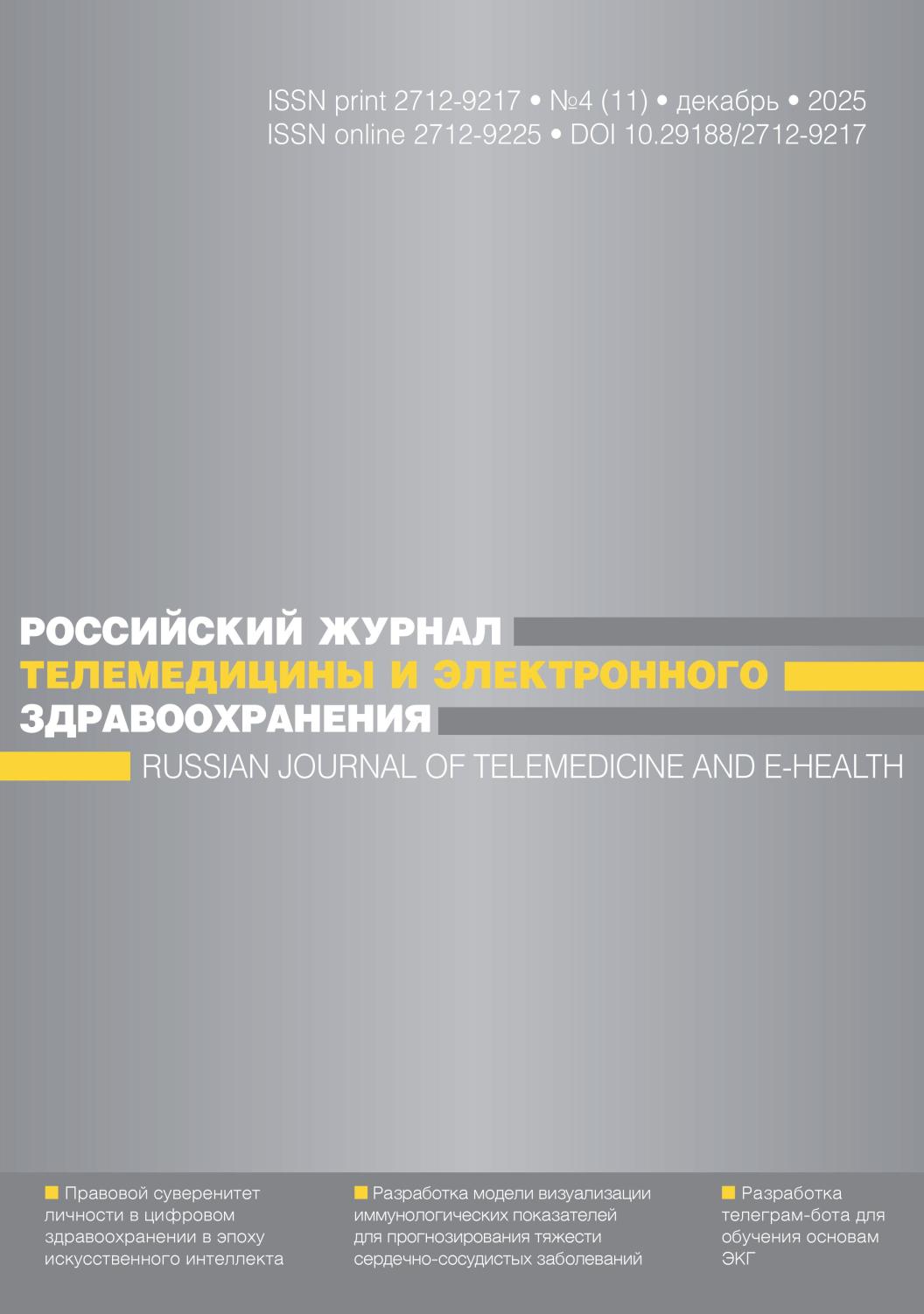
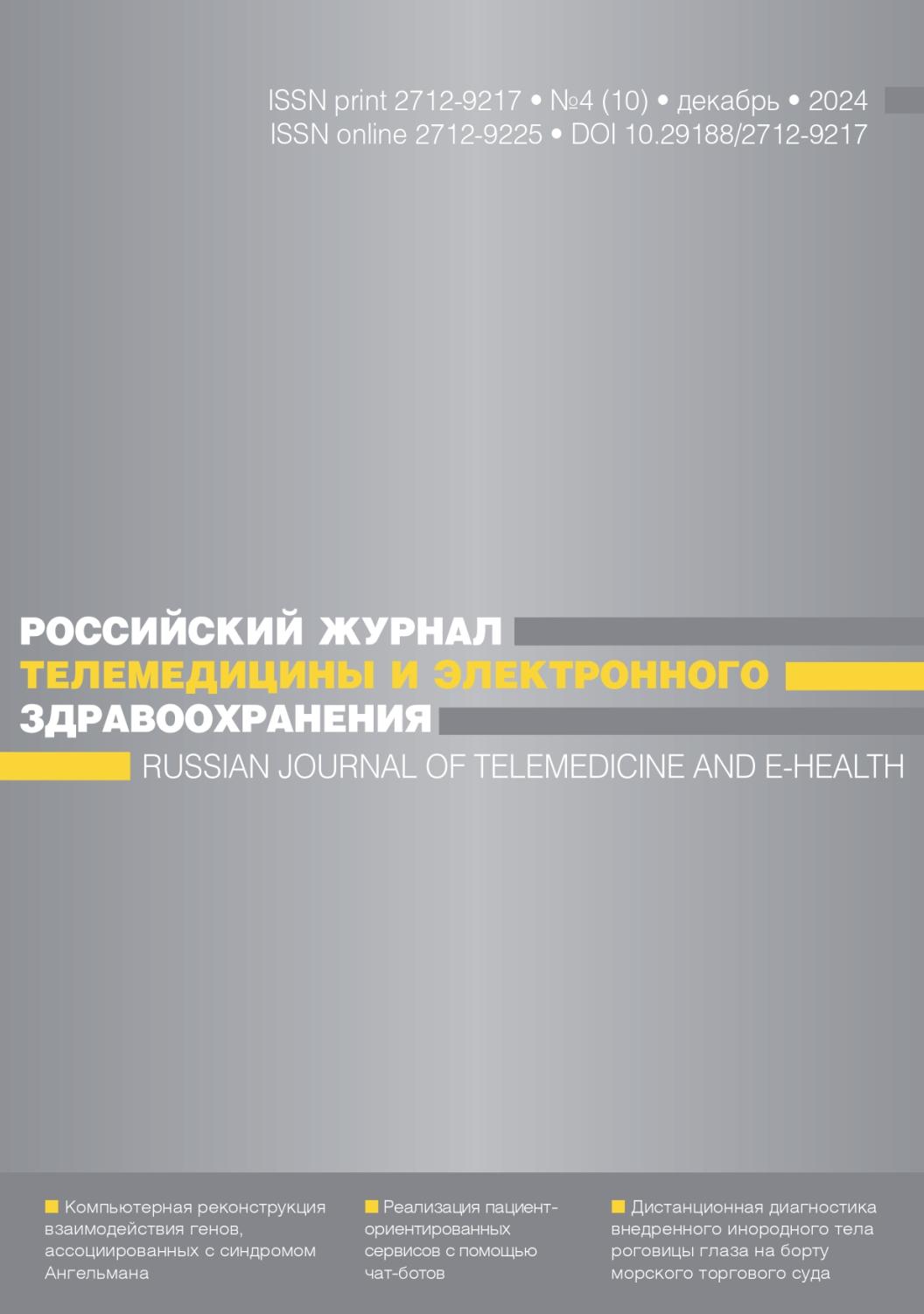
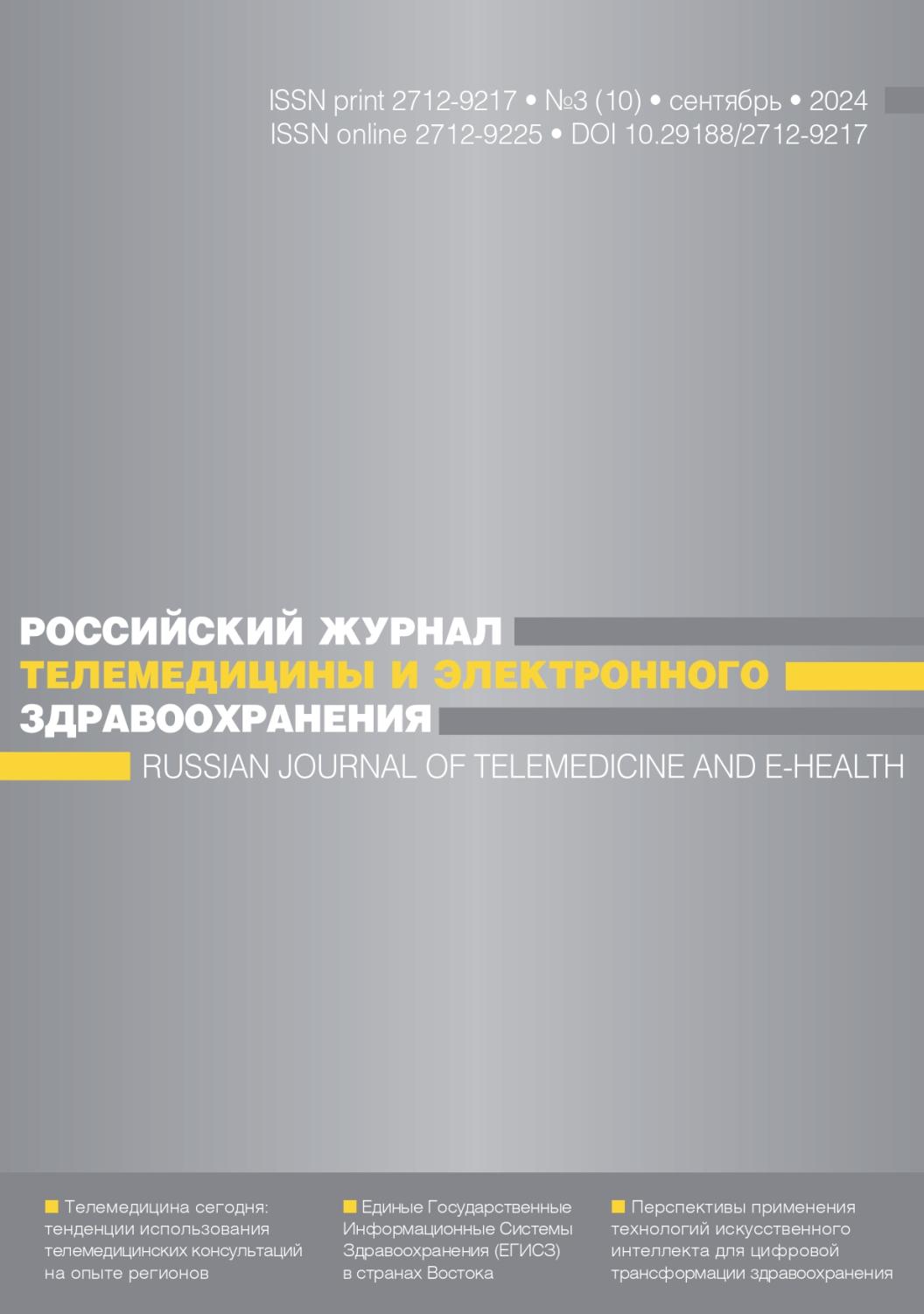
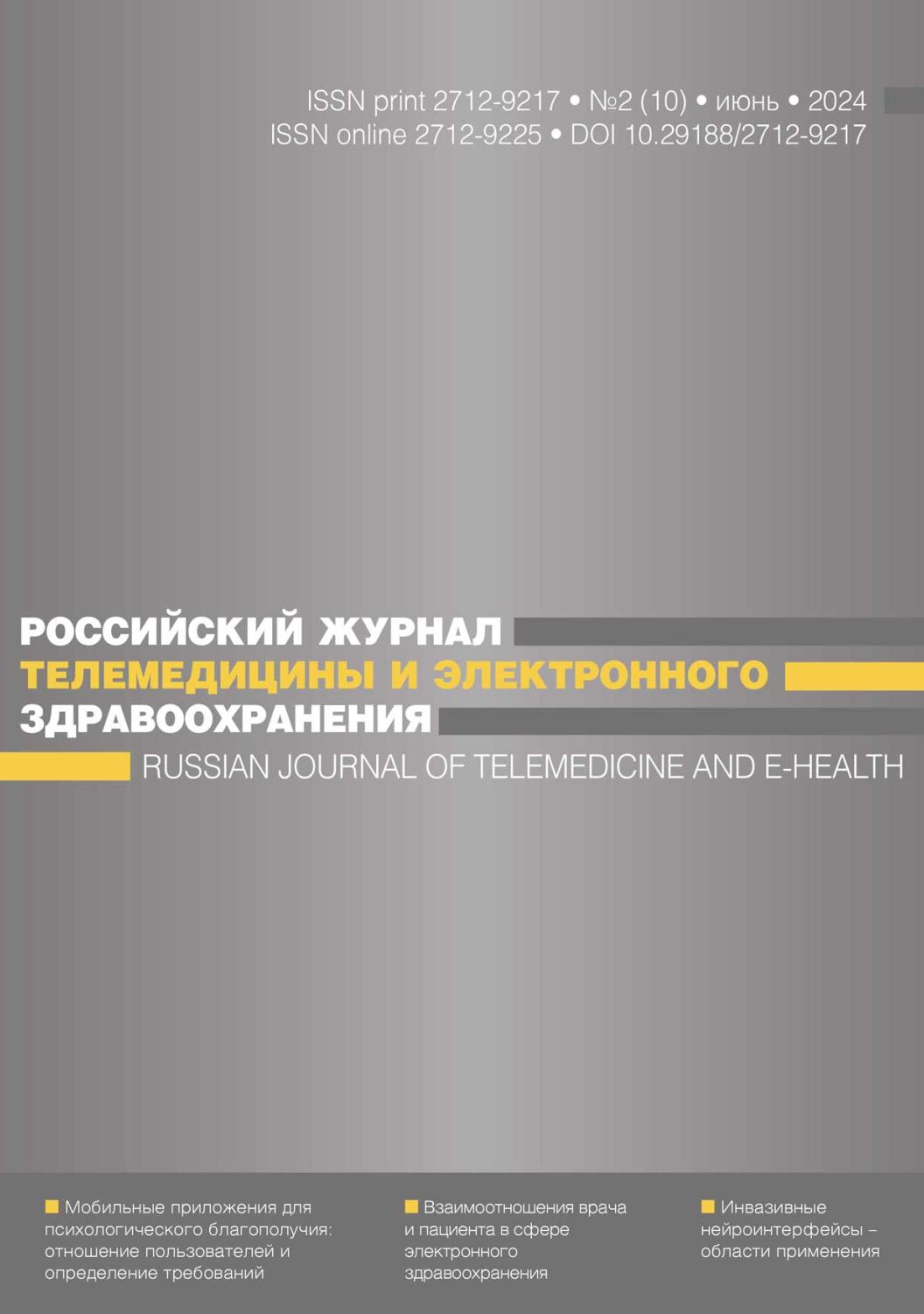
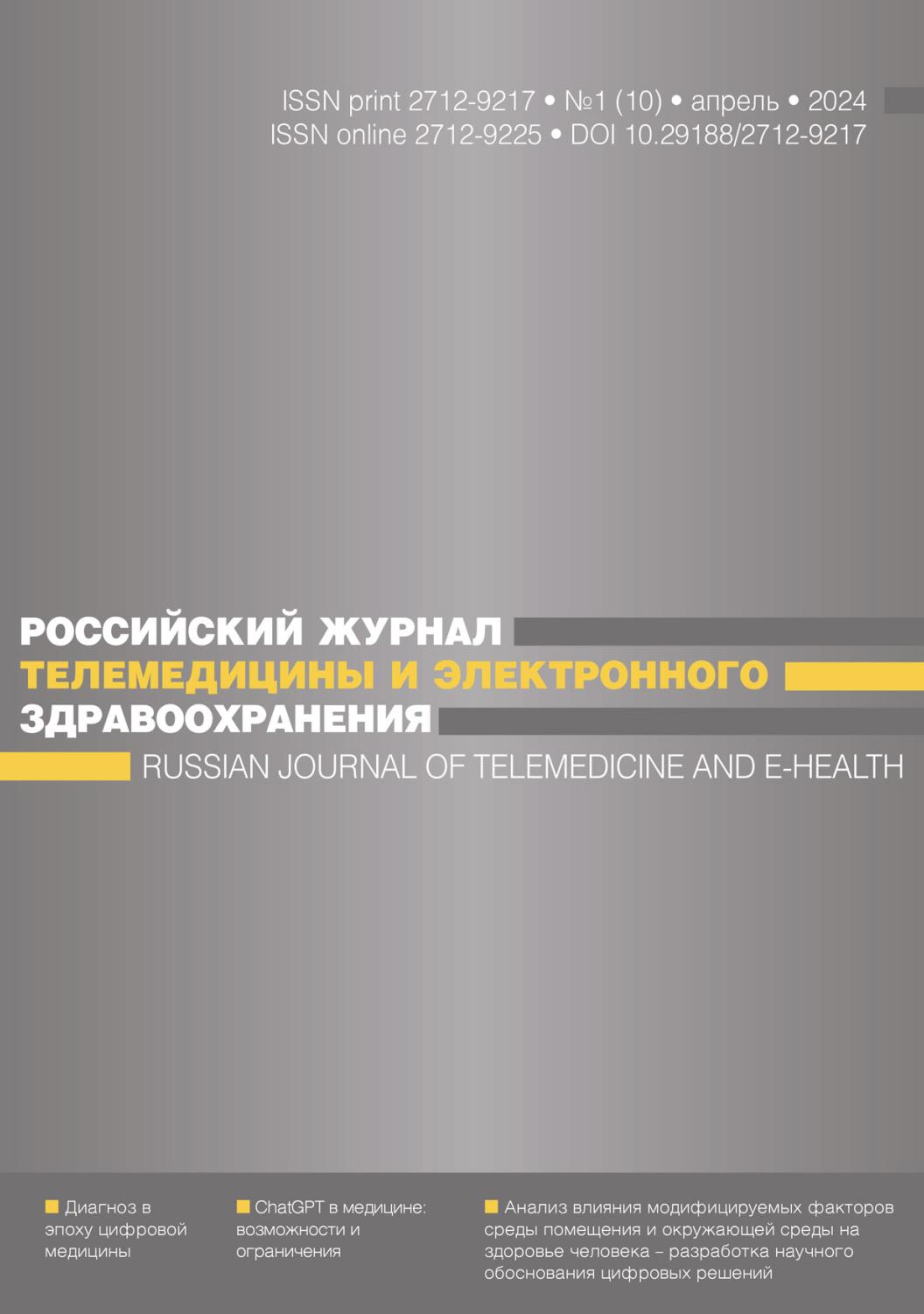


Number №4, 2025
Legal Sovereignty of the Individual in Digital Healthcare in the Era of Artificial Intelligence
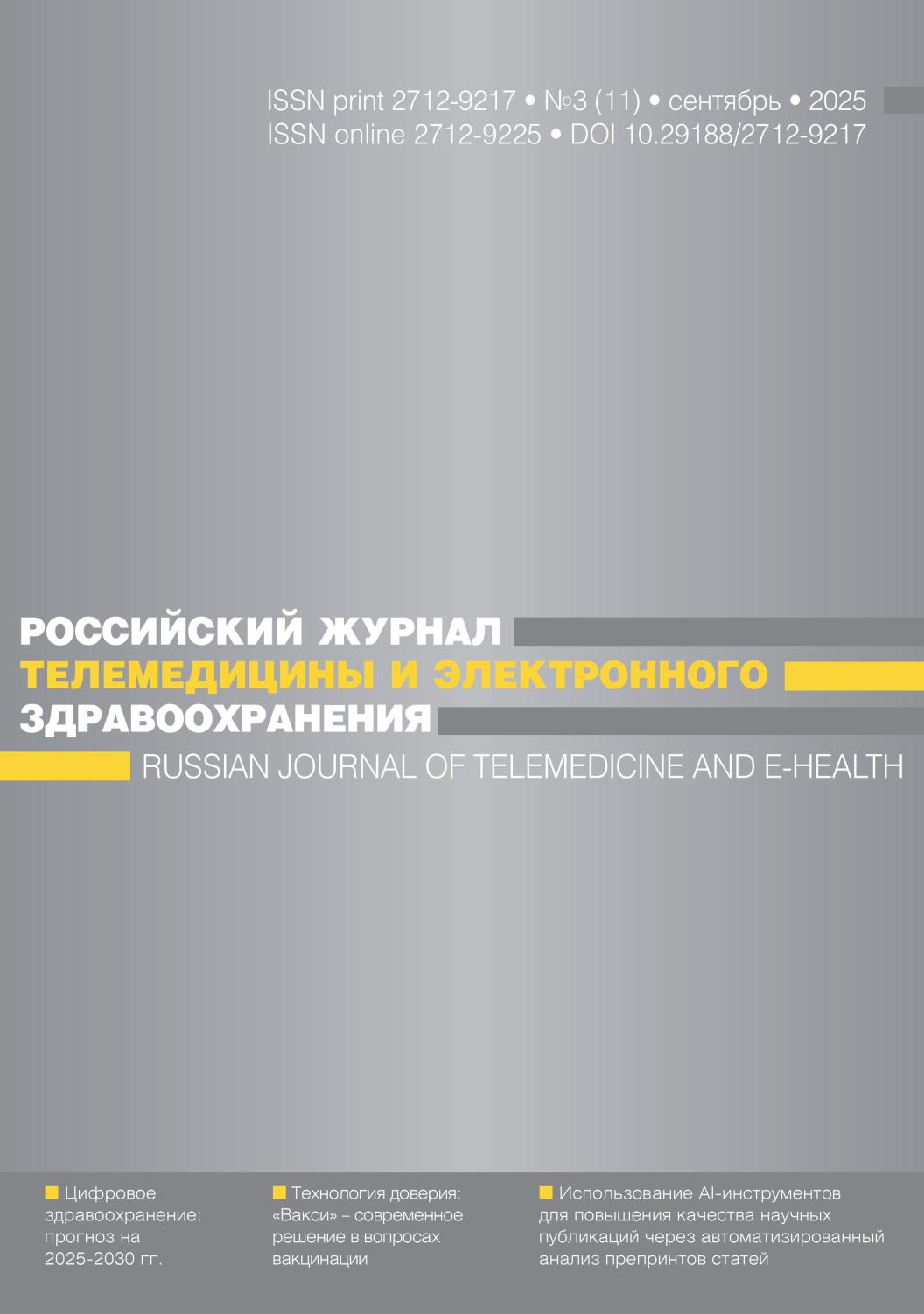
Number №3, 2025
Digital Health: Forecast for 2025-2030
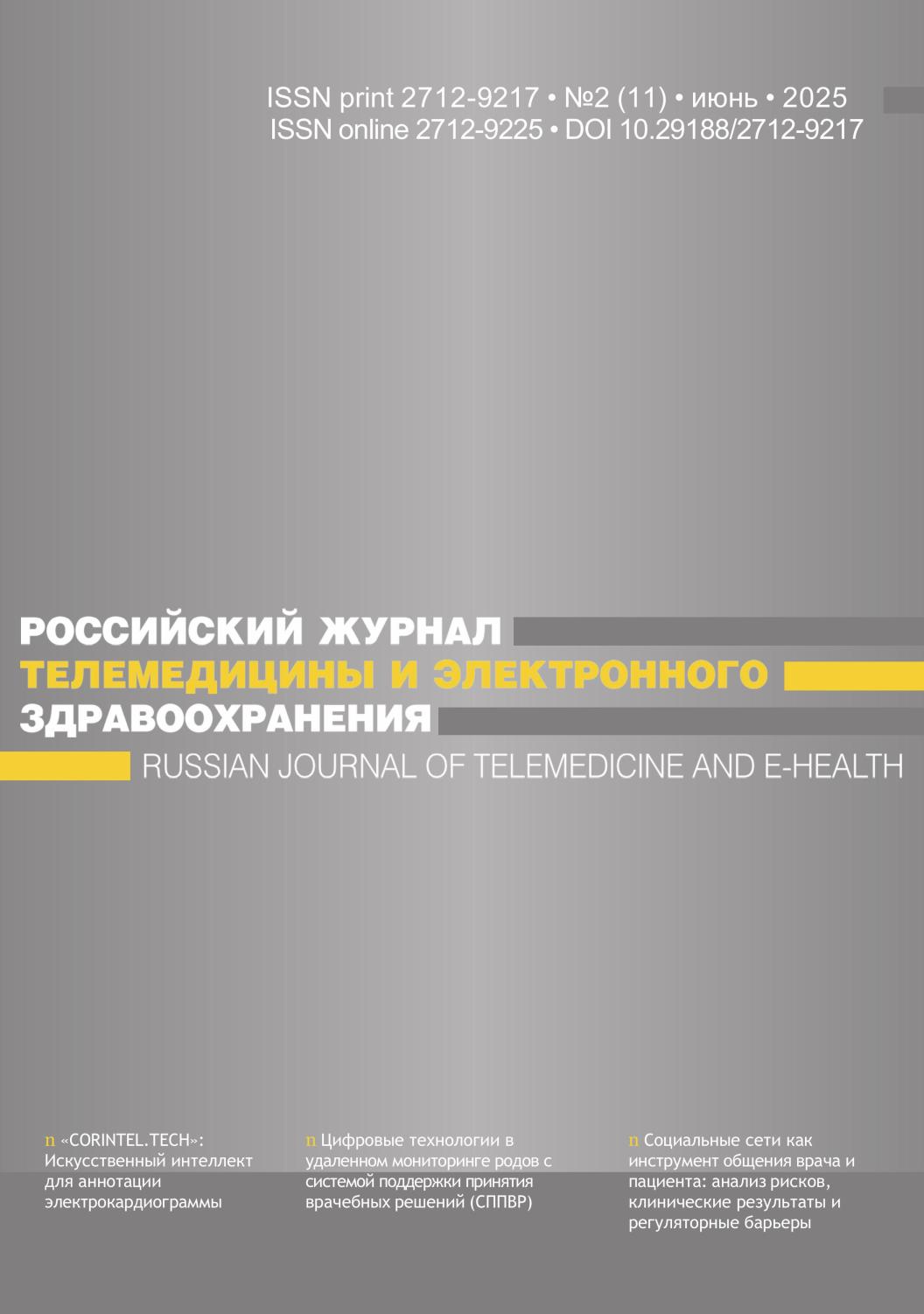
Number №2, 2025
Digital technologies in remote monitoring of childbirth with a Clinical decision support system (CDSS)
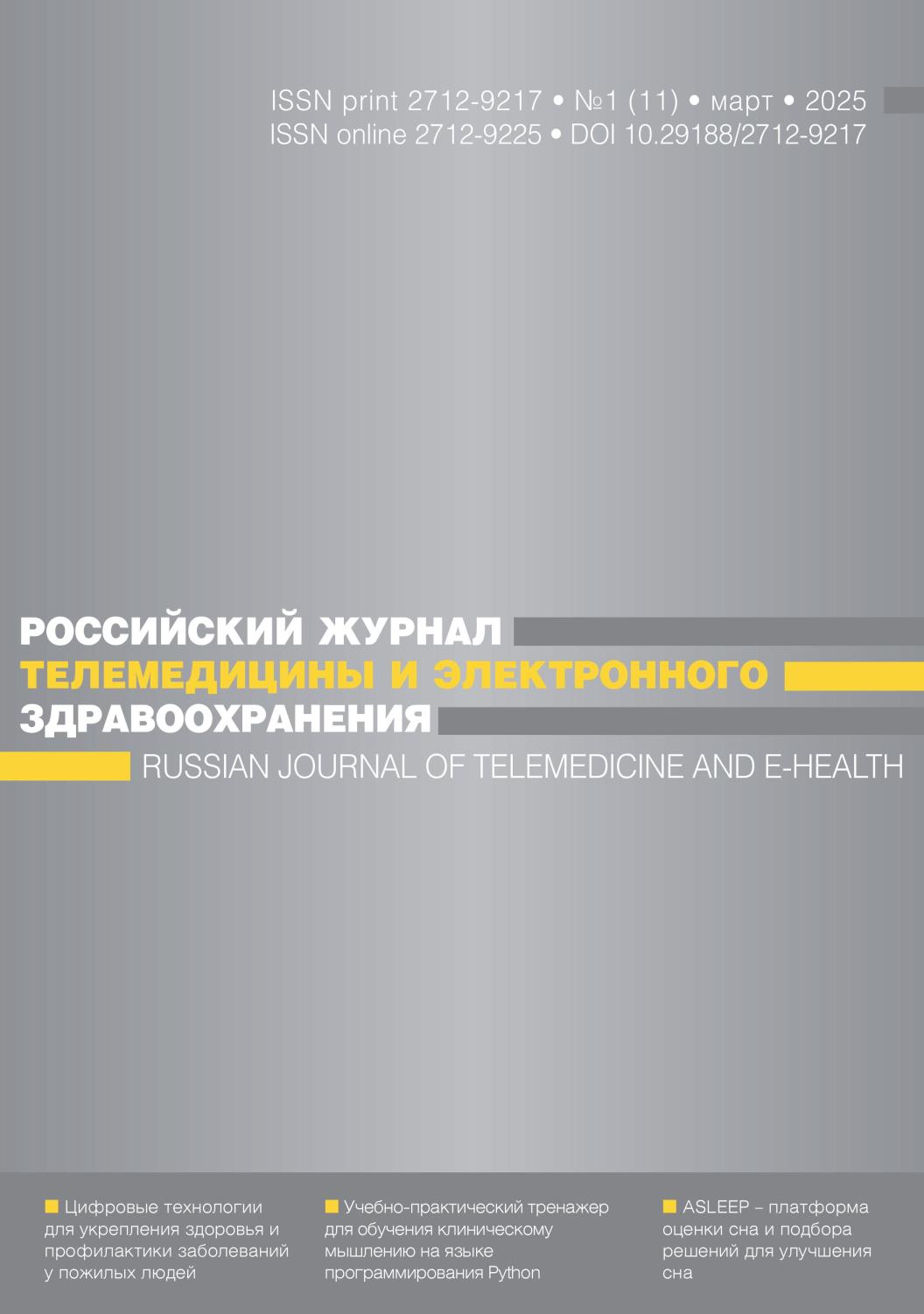
Number №1, 2025
Digital technologies for health promotion and disease prevention in older adults
Number №4, 2024
Computer reconstruction of the interaction of genes associated with Angelman syndrome
Number №3, 2024
Telemedicine today: trends in the use of telemedicine consultations based on regional experience
Number №2, 2024
Mobile apps for psychological well-being: user attitudes and definition of requirements
Number №1, 2024
Diagnosis in the era of digital medicine
Number №4, 2023
Artificial intelligence in Russian healthcare: collecting and preparing data for machine learning
Number №3, 2023
China as a supplier of medical equipment in the Russian Federation. Options for cooperation and features of working with Chinese suppliers
Number №2, 2023
Experience in teaching telemedicine in the system of higher professional education The attitude of medical workers to telemedicine technologies
Number №4, 2022
Physician burnout: the hidden healthcare crisis. Results of an online survey of doctors
Number №3, 2022
Interaction of clinical and diagnostic medicine. Results of an online survey of doctors
Number №2, 2022
Mobile applications for mental health self-management: a review of customers’ opinions Ultrasound robots: ready-to-use solutions and perspective directions
Number №1, 2022
Digital transformation of the pathological service as a way to improve the quality of medical care
Number №4, 2021
Clinical guidelines of the Ministry of Health of the Russian Federation: are doctors ready to follow them? Results of an online survey of doctors.
Number №3, 2021
Виртуальная реальность (VR) в клинической медицине: международный и российский опыт
Number №2, 2021
Дистанционные консультации пациентов: что изменилось за 20 лет?
Number №1, 2021
Experience of participation in the blood pressure telemonitoring pilot project of the Ministry of Healthcare
Number №4, 2020
Автоматизация процесса выявления у беременных заболевания COVID-19
Number №3, 2020
Remote cognitive behavioral therapy for stress disorder associated with the COVID-19 pandemic
Number №2, 2020
Distance education at a medical school during the COVID-19 pandemic: the first experience through the eyes of students
Number №1-2, 2018
Ответственность при использовании телемедицины: врач или юрист Скрининг меланомы: искусственный интеллект, mHealth и теледерматология
Number №3, 2018 год
II Всероссийский форум по телемедицине, цифровизации здравоохранения и медицинскому маркетингу «ТЕЛЕМЕДФОРУМ 2019» Эффективность телемедицинских консультаций «пациент-врач» Телереабилитация: рандомизированное исследование исходов
Number №1-2, 2019
Роль искусственного интеллекта в медицине Информационная система поддержки принятия врачебных решений
Number №1, 2020
Technologies for continuous monitoring of blood pressure: prospects for practical application Telemedicine technologies in the Chinese army
Number №2, 2017
Primary telemedicine consultation "patient-doctor": first systematization of methodology
Number №1, 2017
1. A systematic review of using Internet messengers in telemedicine 2. Telemedicine and social networks in the fight against drug addiction
Number №1, 2016
1. The Experience of the Telehealth Network of Minas Gerais, Brazil 2. The Remote Monitoring of Patients with Congestive Heart Failure:The Organizational Impact..
Number №1, 2015
Teleassessment for diagnosis and treatment in urology Efficiency of telemedicine at the northern regions Russian Federation A.L. Tsaregorodtsev

Using Online Social Networks as a Support Tool to Reduce Psychoactive Drug Abuse

D.J.Barbosa, N.C. Rodrigues, L.T. Cavalini
12504
Download PDF

The number of people using the Internet around the world is increasing, especially online social networks where interpersonal relationships previously requiring personal contact can now occur in the virtual environment. The number of users of psychoactive drugs is also increasing, in particular alcohol and crack. In Brazil, users of psychoactive drugs can receive free healthcare services at the Psychosocial Care Centers for Alcohol and Drugs (CAPS-ad) [Centros de AtenK<o Psicossocial 3lcool e Drogas] of Brazil's Unified Health System (SUS) [Sistema rnico de Sabde]. However, many psychoactive drug users do not know about this institution and the types of treatment it offers. The objectives of this study were: to create a page called "Getting Free from Drugs" (FLD) [Ficar Livre das Drogas] on an online social network where users of psychoactive drugs can sign up for treatment, and to evaluate the efficiency of drug users signing up via online social networks. This is a qualitative and descriptive study approved by the Research Ethics Committee, where the sample consisted of psychoactive drug users in the city of Rio de Janeiro, having Internet access, and voluntarily seeking help by accessing the FLD page. The setting for the study was a group created on Face-book. Data was collected via an online form on the page. From July to September 2015, there were 25 visits to the page, of which 16 visited the CAPS-ad to initiate treatment after receiving information on this page. The most visits 13 occurred in the evening and in August 2015. Of the 25 group members, 19 were females, 3 males and 3 not reporting. Three types of drugs were predominant: alcohol, tobacco and unspecified, with the highest incidence being exclusive alcohol use. Four subjects had used a previous treatment to the CAPS-ad and 12 had never been treated before.

Our findings suggest that online social networks may serve as a support tool in tele-education for combating psychoactive drug abuse and can attract patients, since 64% of FLD Facebook page visitors visited the CAPS-ad and began treatment for drug dependency, helping to reduce harm and ensure the well-being of the individual

Conflict of interest. The author declare no conflict of interest

Attachment Size
Download 197.85 KB
Keywords: telemedicine, tele-education, psychoactive drugs, addiction, social media