Number №4, 2025
Legal Sovereignty of the Individual in Digital Healthcare in the Era of Artificial Intelligence
Number №3, 2025
Digital Health: Forecast for 2025-2030
Number №2, 2025
Digital technologies in remote monitoring of childbirth with a Clinical decision support system (CDSS)
Number №1, 2025
Digital technologies for health promotion and disease prevention in older adults
Number №4, 2024
Computer reconstruction of the interaction of genes associated with Angelman syndrome
Number №3, 2024
Telemedicine today: trends in the use of telemedicine consultations based on regional experience
Number №2, 2024
Mobile apps for psychological well-being: user attitudes and definition of requirements
Number №1, 2024
Diagnosis in the era of digital medicine
Number №4, 2023
Artificial intelligence in Russian healthcare: collecting and preparing data for machine learning

Number №3, 2023
China as a supplier of medical equipment in the Russian Federation. Options for cooperation and features of working with Chinese suppliers

Number №2, 2023
Experience in teaching telemedicine in the system of higher professional education The attitude of medical workers to telemedicine technologies
Number №4, 2022
Physician burnout: the hidden healthcare crisis. Results of an online survey of doctors
Number №3, 2022
Interaction of clinical and diagnostic medicine. Results of an online survey of doctors
Number №2, 2022
Mobile applications for mental health self-management: a review of customers’ opinions Ultrasound robots: ready-to-use solutions and perspective directions
Number №1, 2022
Digital transformation of the pathological service as a way to improve the quality of medical care
Number №4, 2021
Clinical guidelines of the Ministry of Health of the Russian Federation: are doctors ready to follow them? Results of an online survey of doctors.
Number №3, 2021
Виртуальная реальность (VR) в клинической медицине: международный и российский опыт
Number №2, 2021
Дистанционные консультации пациентов: что изменилось за 20 лет?
Number №1, 2021
Experience of participation in the blood pressure telemonitoring pilot project of the Ministry of Healthcare
Number №4, 2020
Автоматизация процесса выявления у беременных заболевания COVID-19
Number №3, 2020
Remote cognitive behavioral therapy for stress disorder associated with the COVID-19 pandemic
Number №2, 2020
Distance education at a medical school during the COVID-19 pandemic: the first experience through the eyes of students
Number №1-2, 2018
Ответственность при использовании телемедицины: врач или юрист Скрининг меланомы: искусственный интеллект, mHealth и теледерматология
Number №3, 2018 год
II Всероссийский форум по телемедицине, цифровизации здравоохранения и медицинскому маркетингу «ТЕЛЕМЕДФОРУМ 2019» Эффективность телемедицинских консультаций «пациент-врач» Телереабилитация: рандомизированное исследование исходов
Number №1-2, 2019
Роль искусственного интеллекта в медицине Информационная система поддержки принятия врачебных решений
Number №1, 2020
Technologies for continuous monitoring of blood pressure: prospects for practical application Telemedicine technologies in the Chinese army
Number №2, 2017
Primary telemedicine consultation "patient-doctor": first systematization of methodology
Number №1, 2017
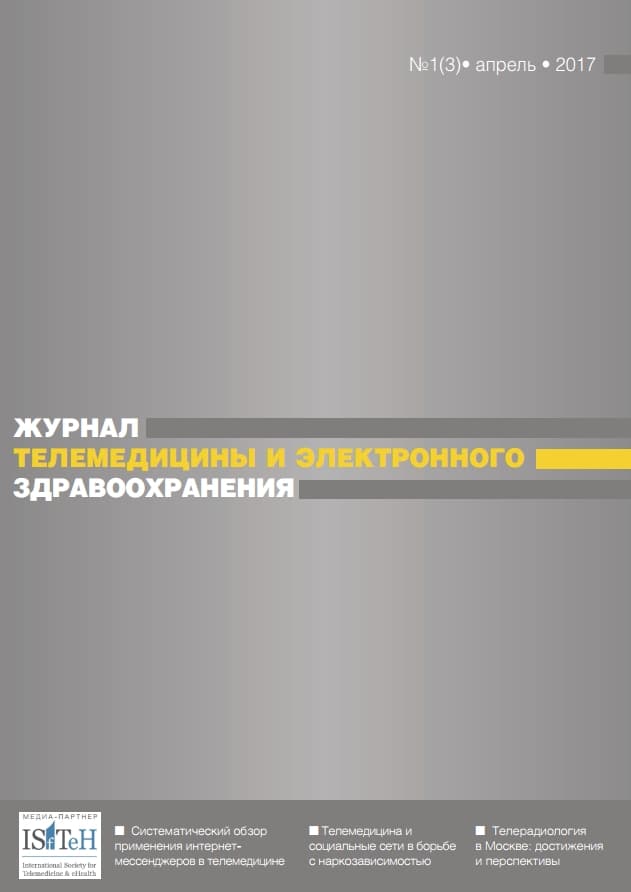
1. A systematic review of using Internet messengers in telemedicine 2. Telemedicine and social networks in the fight against drug addiction
Number №1, 2016
1. The Experience of the Telehealth Network of Minas Gerais, Brazil 2. The Remote Monitoring of Patients with Congestive Heart Failure:The Organizational Impact..
Number №1, 2015
Teleassessment for diagnosis and treatment in urology Efficiency of telemedicine at the northern regions Russian Federation A.L. Tsaregorodtsev

Technology of trust: «Vaxi» – a modern vaccination solution

Number №3, 2025 - page 19-24
DOI: 10.29188/2712-9217-2025-11-3-19-24
For citation: Gircha A.Yu., Uridin A.M., Zolotnitsyna V.D., Dmitrieva D.S., Aleshina L.V., Korneeva D.A., Sidamonty N.A. Technology of trust: «Vaxi» – a modern vaccination solution. Russian Journal of Telemedicine and E-Health 2025;11(3):19-24; https://doi.org/10.29188/2712-9217-2025-11-3-19-24
Gircha A.Yu., Uridin A.M., Zolotnicyna V.D., Dmitrieva D.S., Aleshina L.V., Korneeva D.A., Sidamonty N.A.
Information about authors:
  • Gircha A.Yu. – resident in Radiology, Russian Medical Academy of Continuous Professional Education (RMANPO) of the Ministry of Health of the Russian Federation, Moscow, Russia
  • Uridin A.M. – LLC «PK DIMAKS»; Moscow Financial and Industrial University «Synergy», Moscow, Russia
  • Zolotnitsyna V.D. – resident in Laboratory Genetics, Research Centre for Medical Genetics named after Academician N.P. Bochkov, Moscow, Russia
  • Dmitrieva D.S. – 2nd-year Master’s Student, specialty 32.04.01 «Public Health», Pyatigorsk Medical and Pharmaceutical Institute – Branch of Volgograd State Medical University of the Ministry of Health of the Russian Federation, Pyatigorsk, Russia
  • Aleshina L.V. – PhD, Associate Professor at the Department of Clinical Immunology and Allergology, Saratov State Medical University named after V.I. Razumovsky of the Ministry of Health of the Russian Federation, Saratov, Russia
  • Korneeva D.A. – staff Member at the Department of Clinical Immunology and Allergology named after Professor N.G. Astafyeva, Saratov State Medical University named after V.I. Razumovsky of the Ministry of Health of the Russian Federation, Saratov, Russia
  • Sidamonty N.A. – resident in Neonatology, Staff Member at the Department of Anesthesiology, Reanimatology, and Neonatology, M. Gorky Donetsk State Medical University, Donetsk, DPR.
339
Download PDF

Introduction. Vaccine prophylaxis remains an indispensable tool for controlling infectious morbidity. However, the global crisis of trust in vaccination, exacerbated by the "infodemic" and the spread of pseudoscientific data in the digital environment, poses a threat to biological safety. There is an urgent need to create verified digital tools for "doctor–patient" communication.

Objective. The development and implementation of a scientifically grounded digital tool (the «Vaxi» chatbot and information portal) to increase population adherence to immunization and reduce the burden on primary healthcare institutions.

Materials and Methods. A sociological study was conducted using an anonymous survey method (n=117), with the sample stratified by professional (medical/non-medical) and social (parents/childless) criteria. Software development was performed using the Python language with libraries for the Telegram API, while the web interface was implemented on the Tilda platform. An analysis of the market volume (TAM, SAM, SOM) and the competitive environment was conducted.

Results. It was established that 53.8% of respondents search for information about vaccines in unregulated search engines. A critical gap in the level of loyalty to vaccination was revealed between childless respondents (74.2% positive attitude) and parents (40%). 70% of respondents expressed trust in the medical chatbot format. The developed MVP (Minimum Viable Product) includes functions for informing users about the National Vaccination Calendar, emergency prophylaxis, and side effect tracking.

Conclusion. The implementation of the «Vaxi» chatbot represents an effective strategy for combating disinformation, allowing for the automation of routine consultations and the improvement of the population's medical literacy. The project's economic potential is confirmed by the possibility of saving medical personnel time.

Attachment Size
Download 255.14 KB
Keywords: telemedicine; vaccine prophylaxis; chatbots; infodemic; digital health; public health; vaccination adherence