
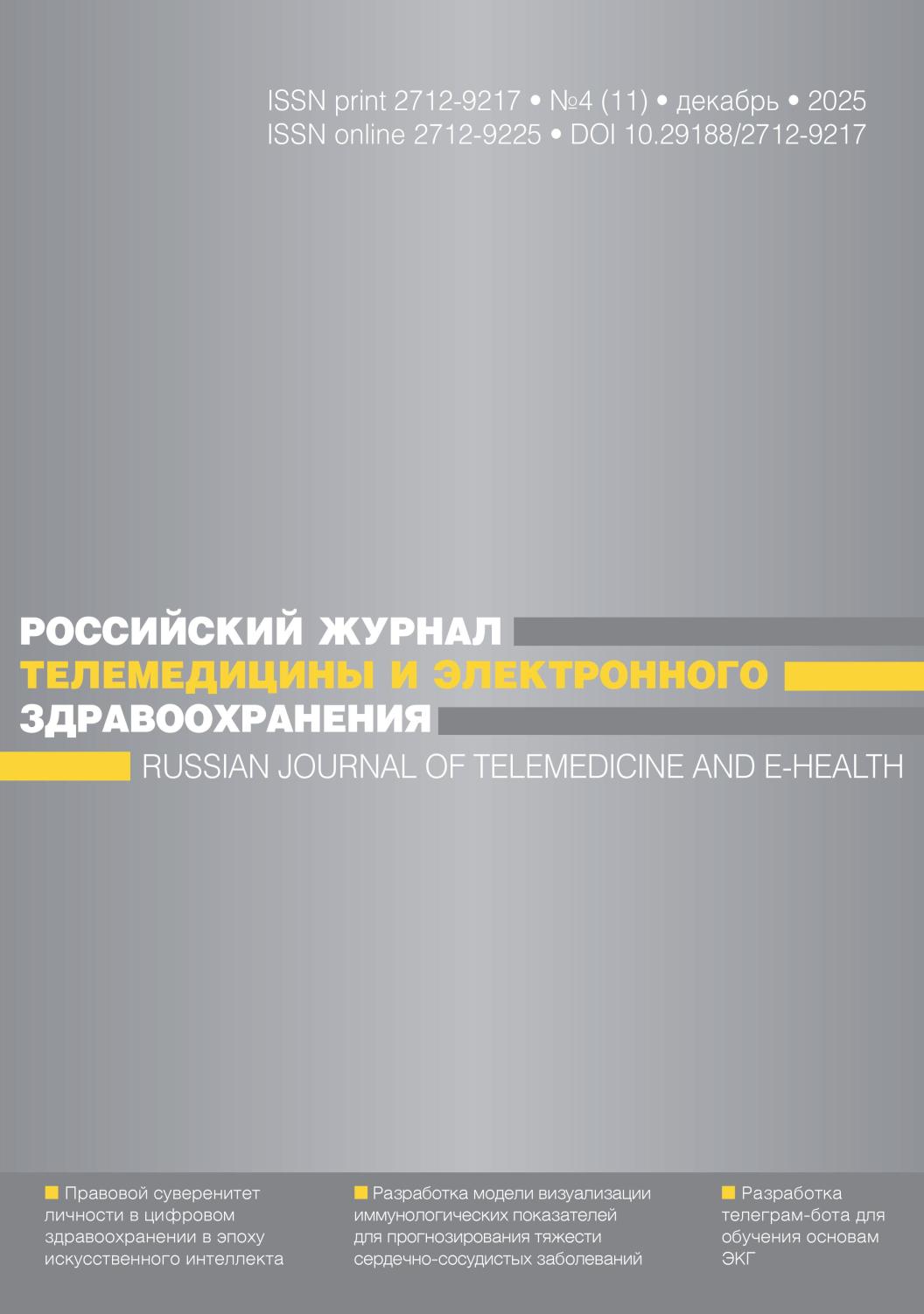



Number №4, 2025
Legal Sovereignty of the Individual in Digital Healthcare in the Era of Artificial Intelligence
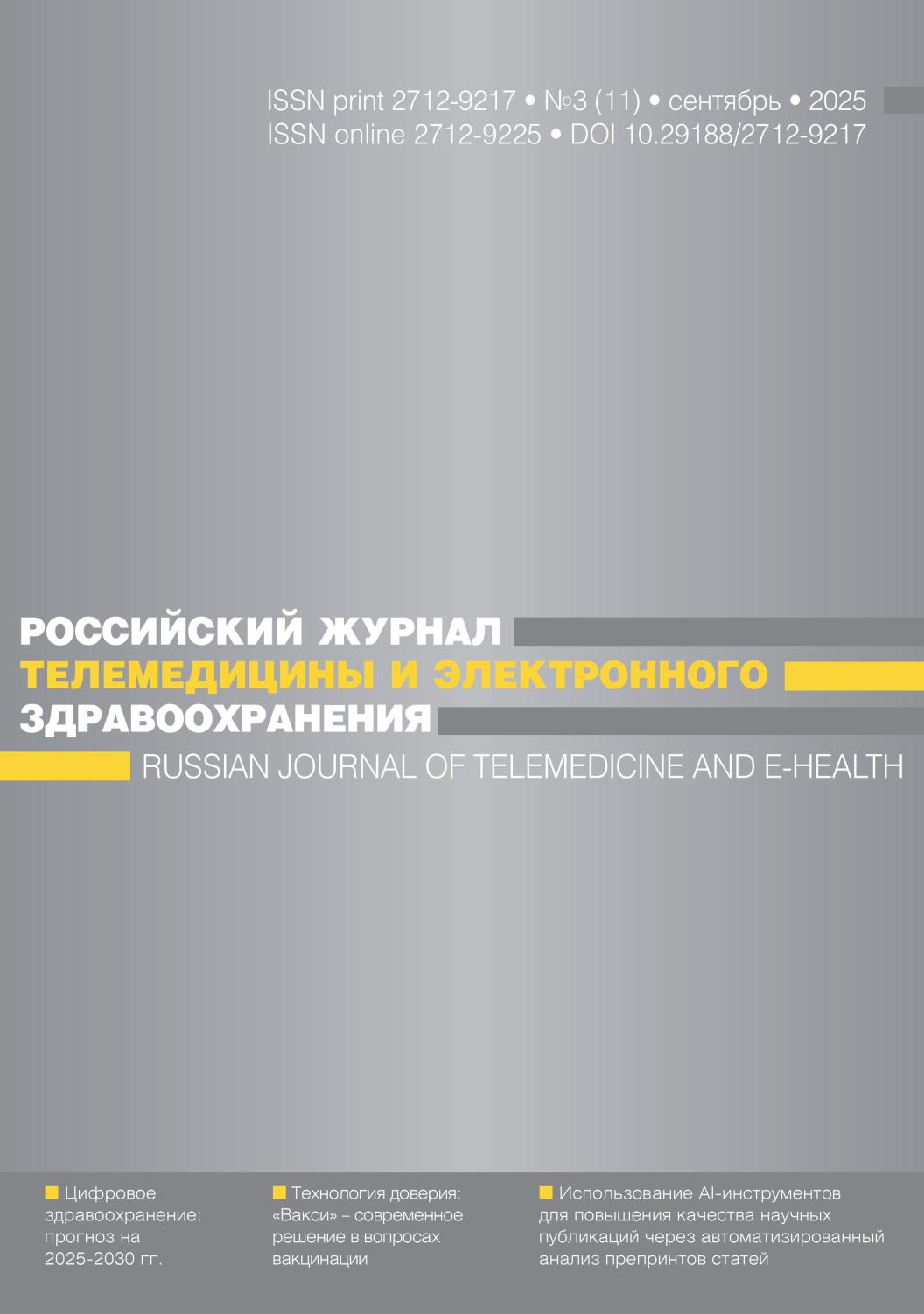
Number №3, 2025
Digital Health: Forecast for 2025-2030
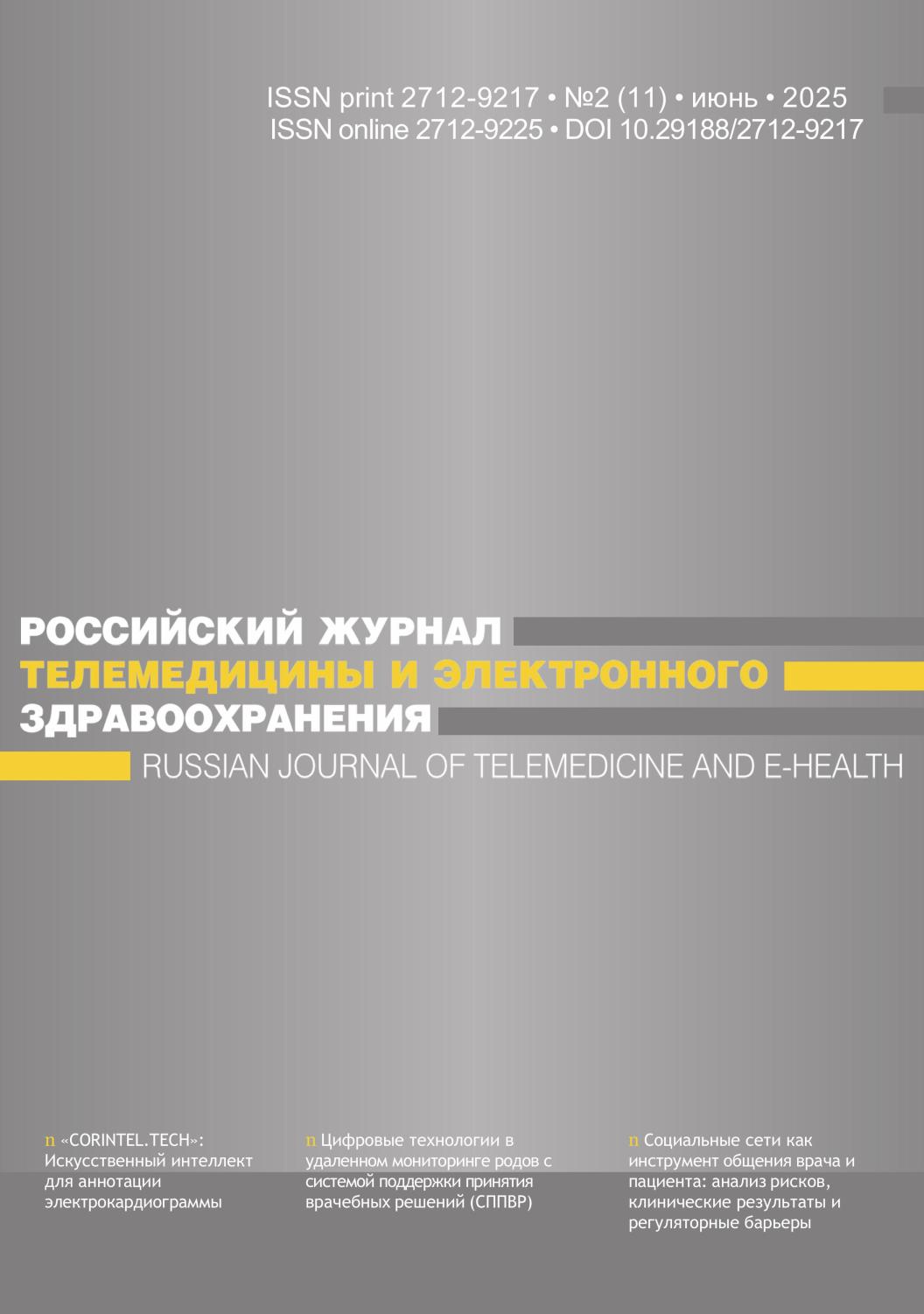
Number №2, 2025
Digital technologies in remote monitoring of childbirth with a Clinical decision support system (CDSS)
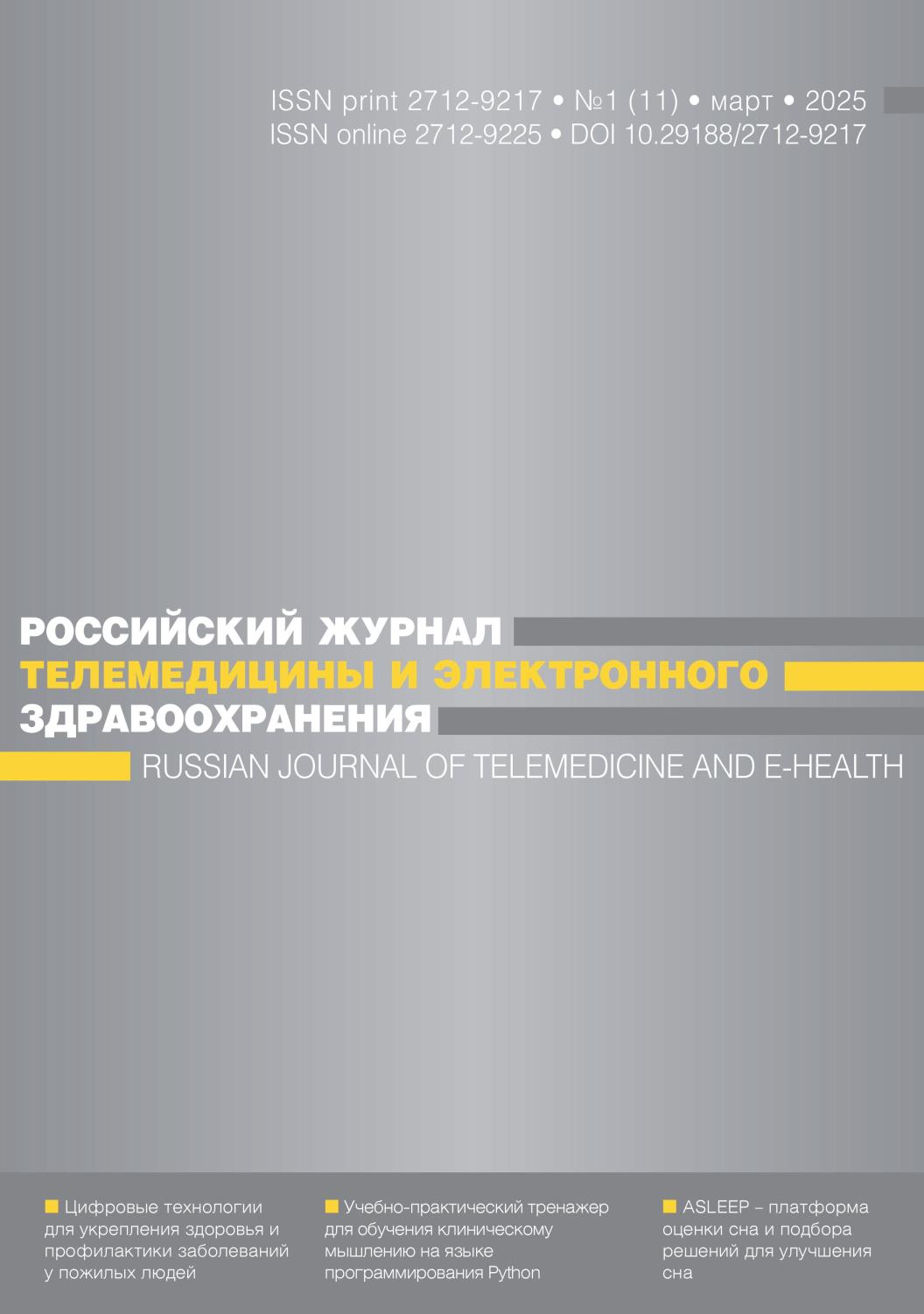
Number №1, 2025
Digital technologies for health promotion and disease prevention in older adults
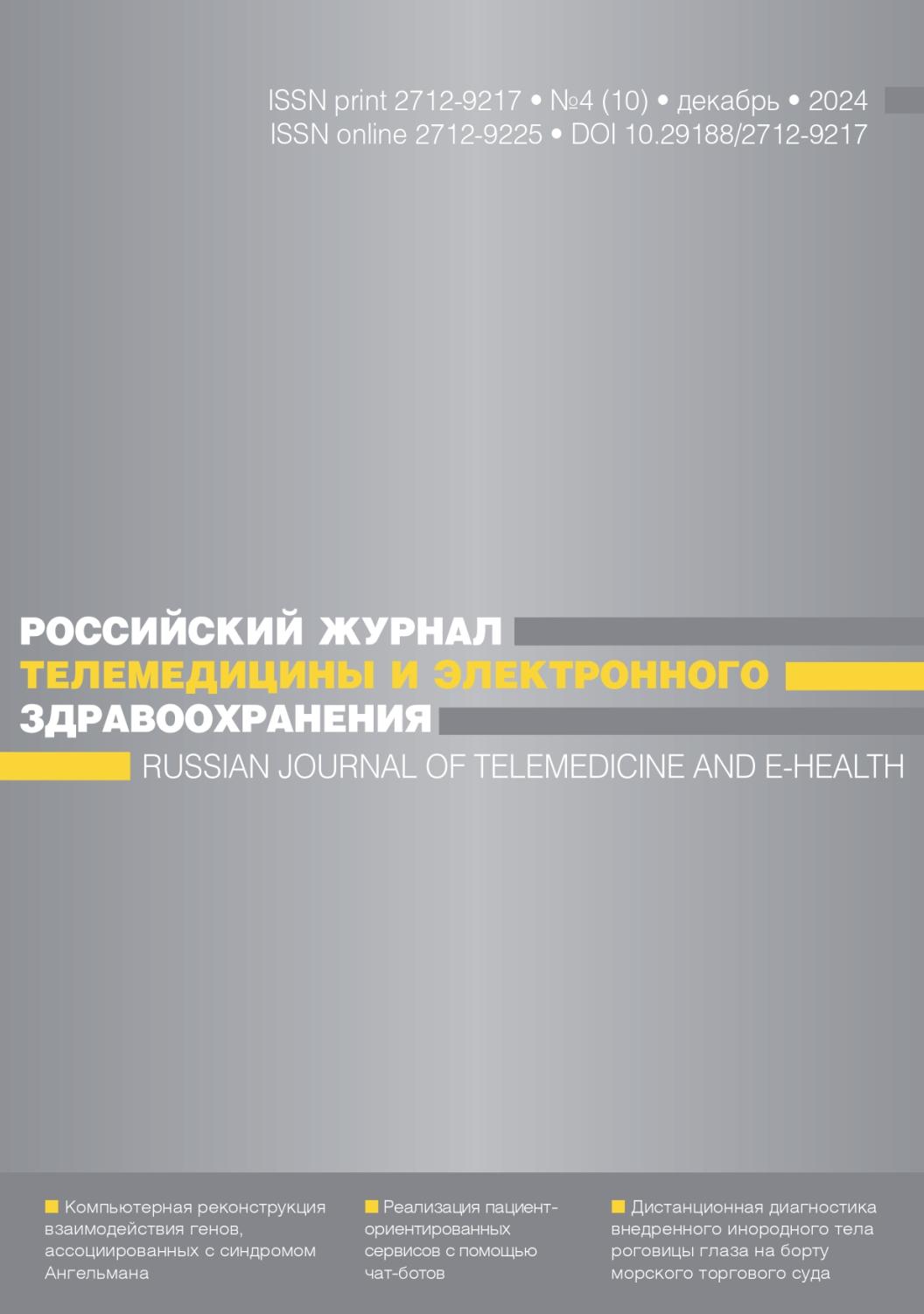
Number №4, 2024
Computer reconstruction of the interaction of genes associated with Angelman syndrome
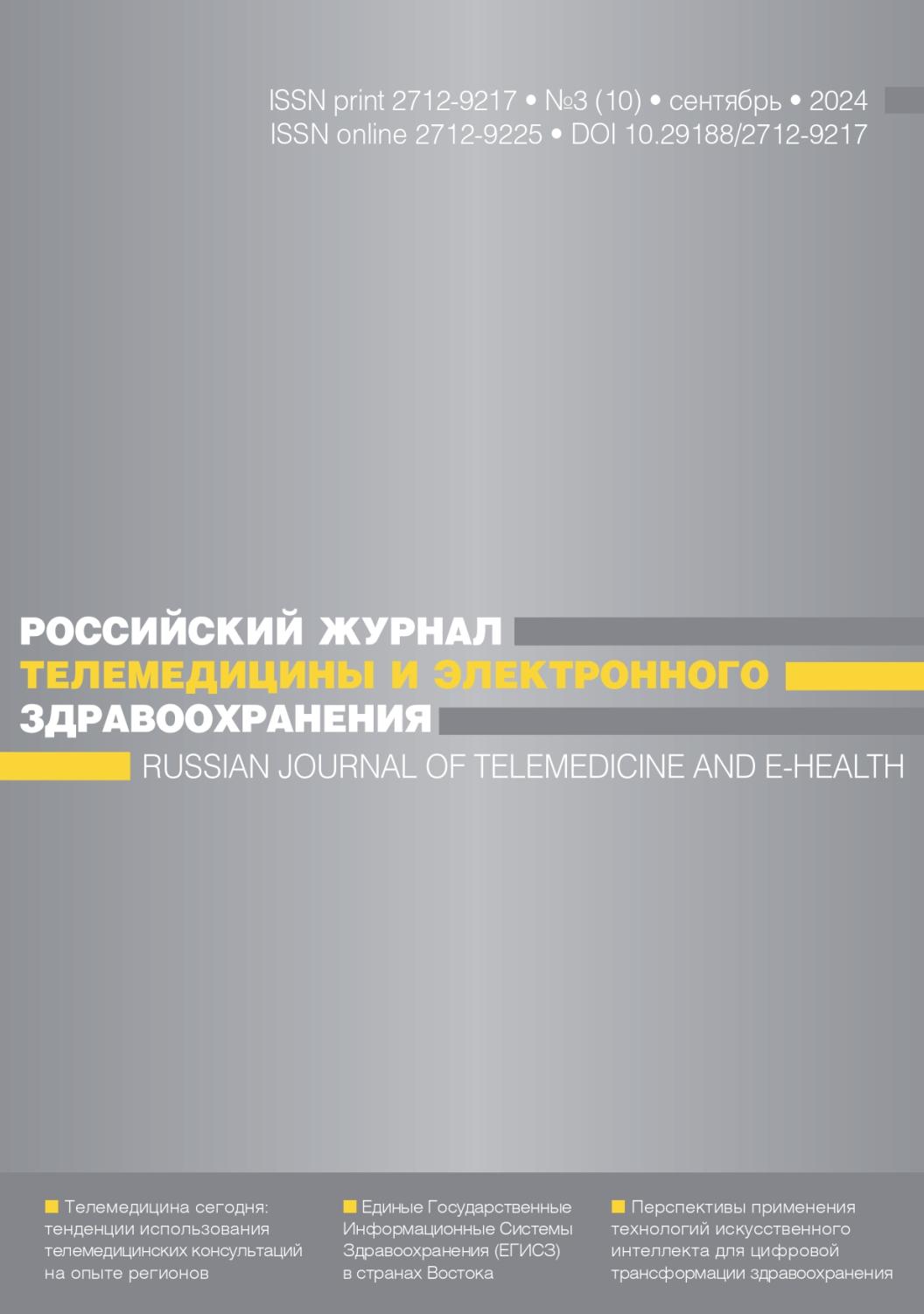
Number №3, 2024
Telemedicine today: trends in the use of telemedicine consultations based on regional experience
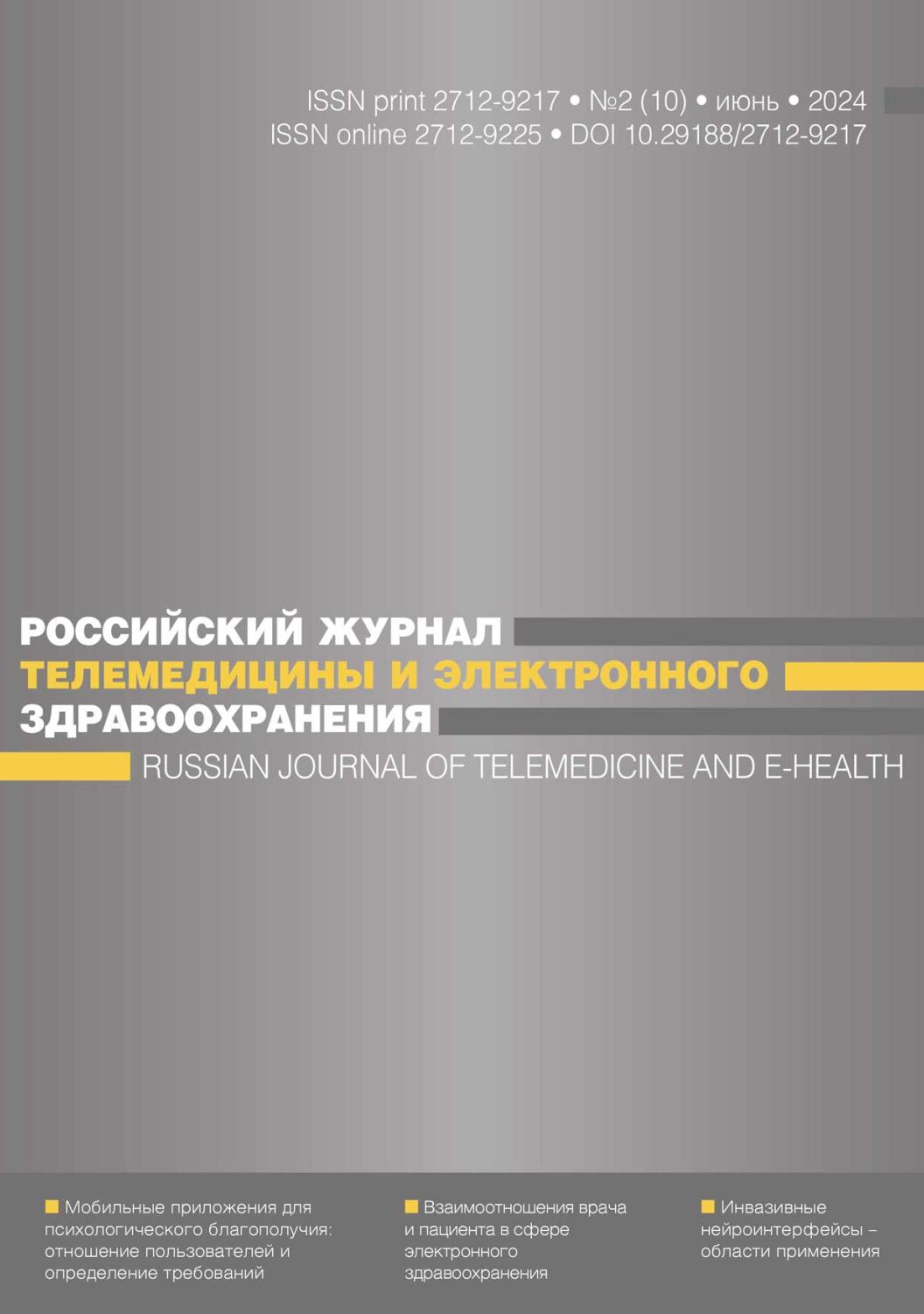
Number №2, 2024
Mobile apps for psychological well-being: user attitudes and definition of requirements
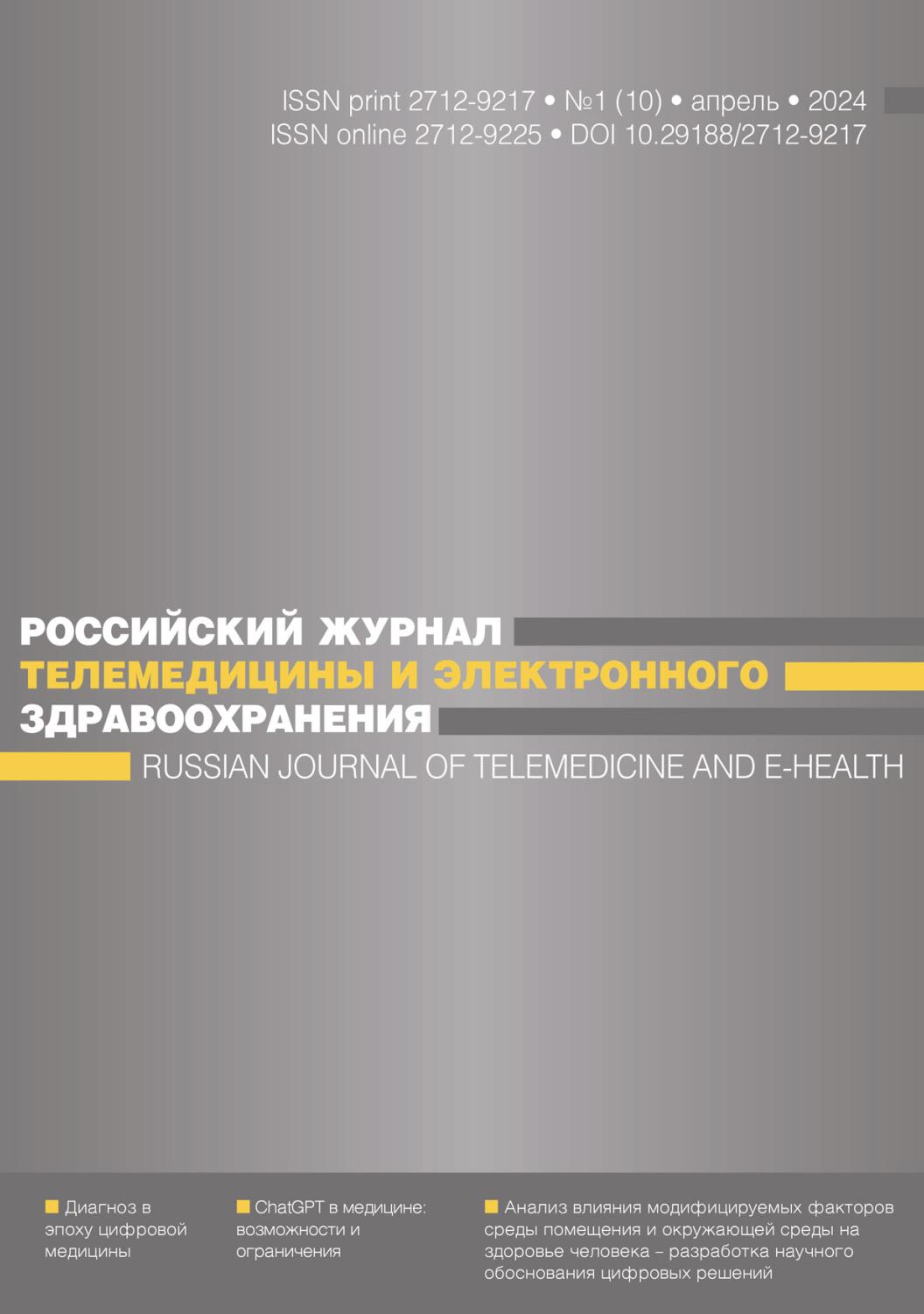
Number №1, 2024
Diagnosis in the era of digital medicine
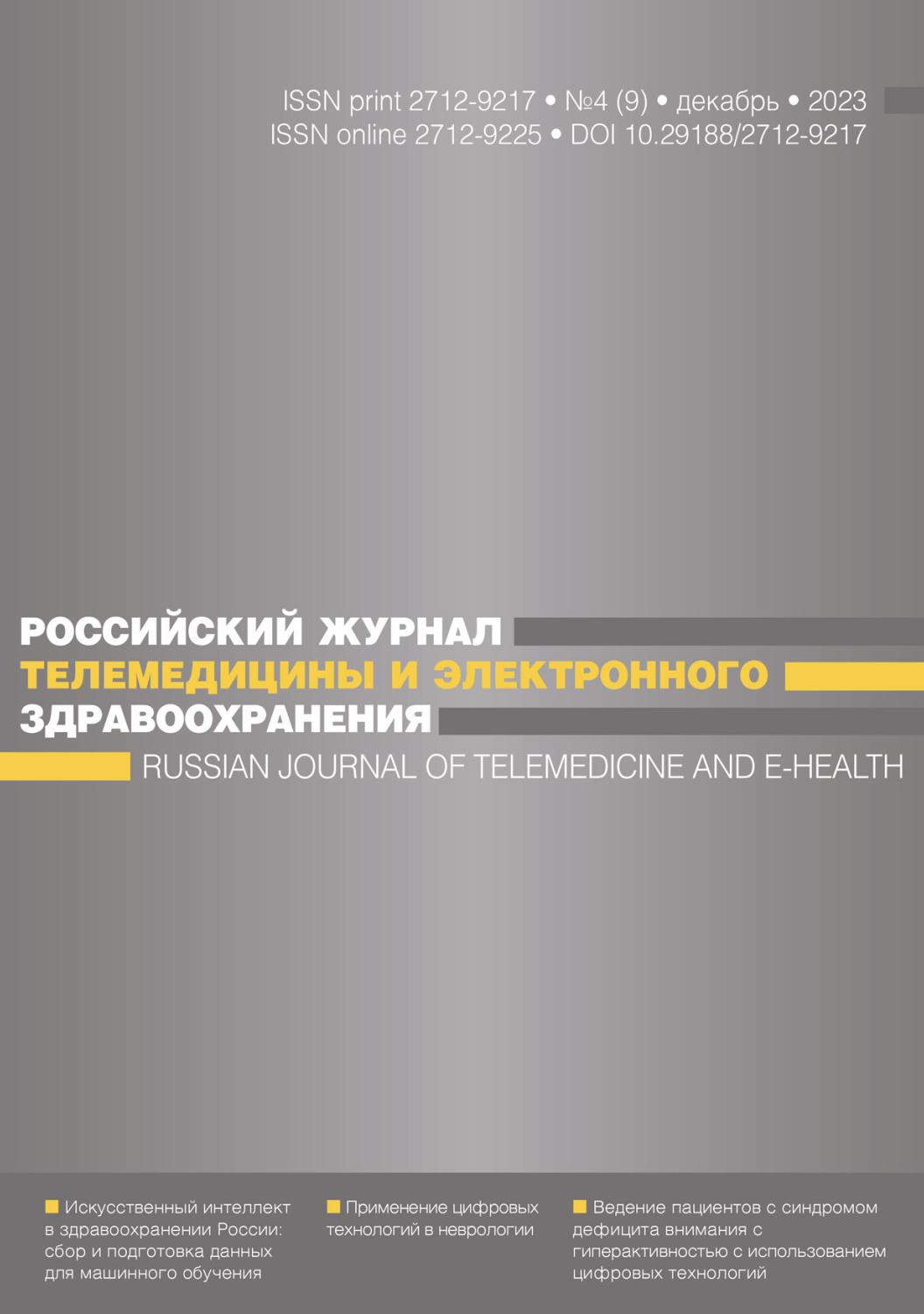
Number №4, 2023
Artificial intelligence in Russian healthcare: collecting and preparing data for machine learning
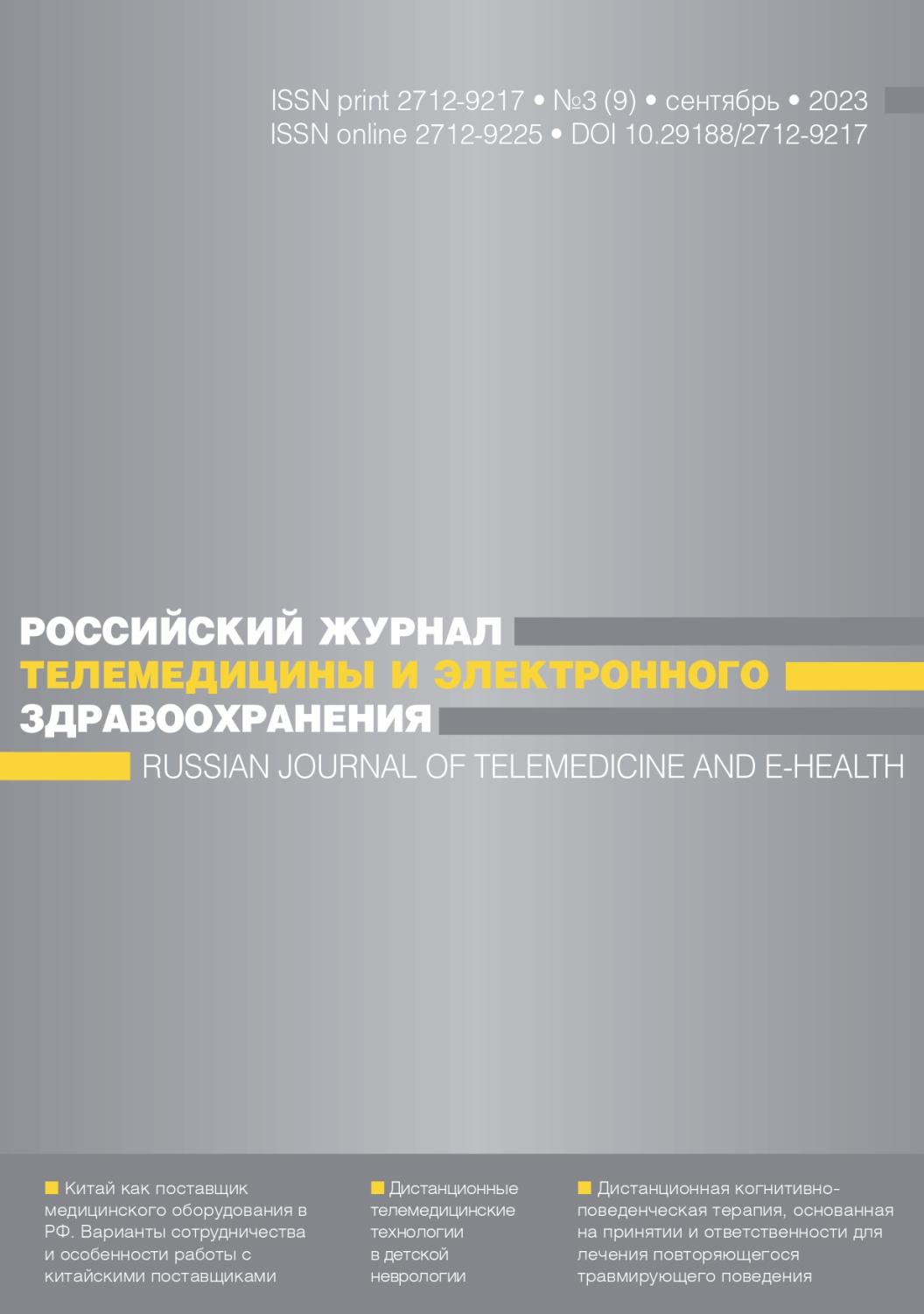
Number №3, 2023
China as a supplier of medical equipment in the Russian Federation. Options for cooperation and features of working with Chinese suppliers
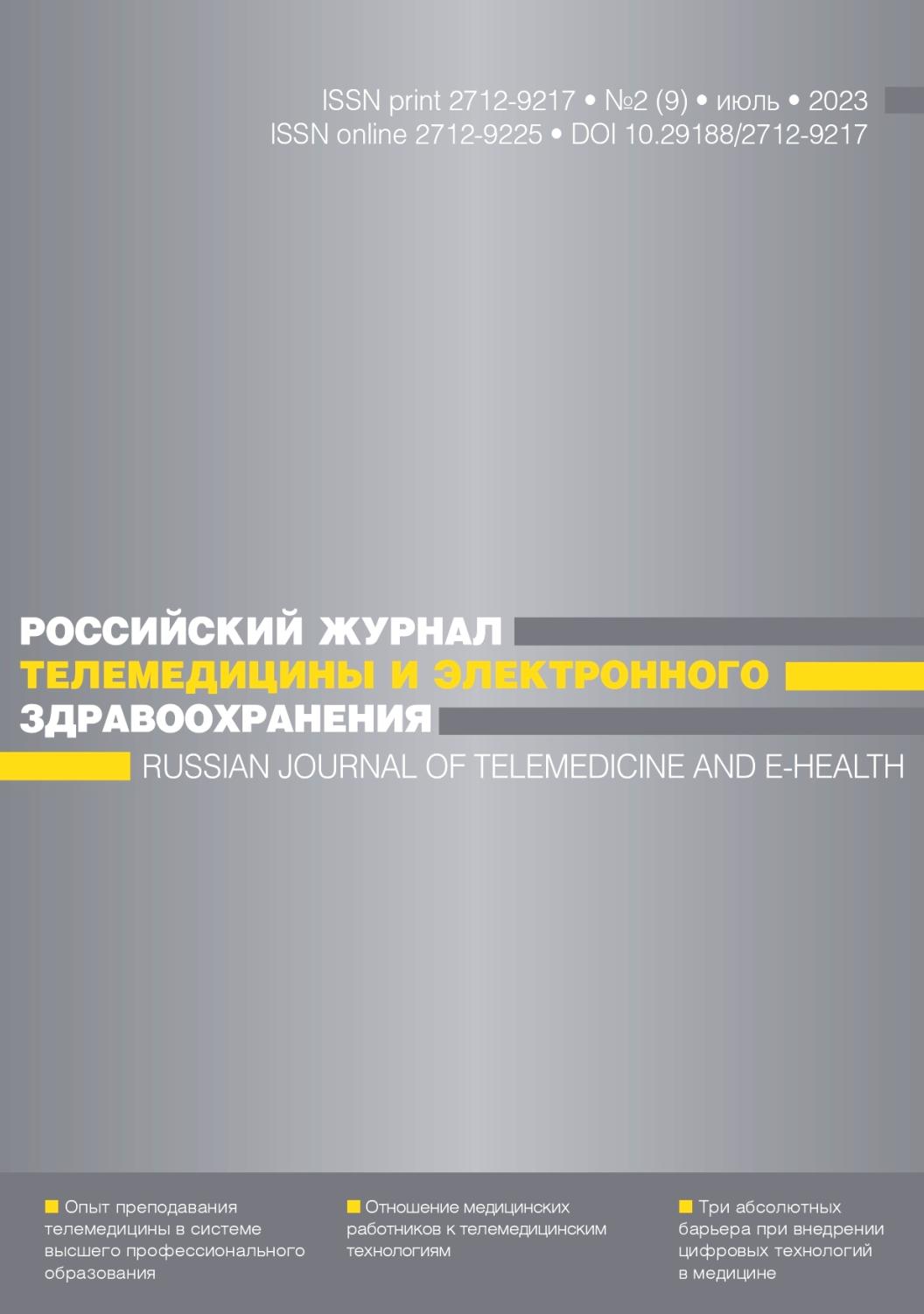
Number №2, 2023
Experience in teaching telemedicine in the system of higher professional education The attitude of medical workers to telemedicine technologies
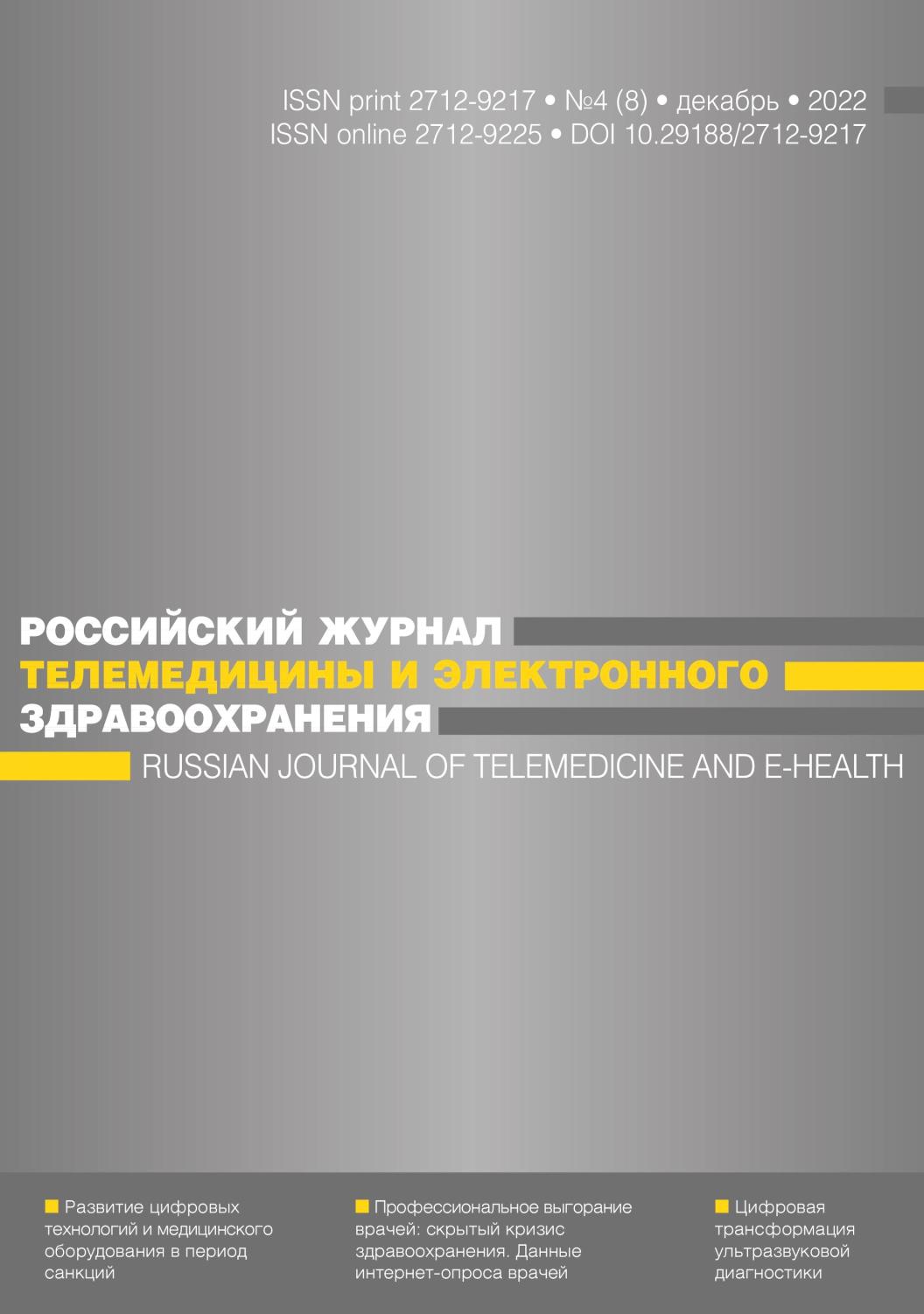
Number №4, 2022
Physician burnout: the hidden healthcare crisis. Results of an online survey of doctors
Number №3, 2022
Interaction of clinical and diagnostic medicine. Results of an online survey of doctors
Number №2, 2022
Mobile applications for mental health self-management: a review of customers’ opinions Ultrasound robots: ready-to-use solutions and perspective directions
Number №1, 2022
Digital transformation of the pathological service as a way to improve the quality of medical care
Number №4, 2021
Clinical guidelines of the Ministry of Health of the Russian Federation: are doctors ready to follow them? Results of an online survey of doctors.
Number №3, 2021
Виртуальная реальность (VR) в клинической медицине: международный и российский опыт
Number №2, 2021
Дистанционные консультации пациентов: что изменилось за 20 лет?
Number №1, 2021
Experience of participation in the blood pressure telemonitoring pilot project of the Ministry of Healthcare
Number №4, 2020
Автоматизация процесса выявления у беременных заболевания COVID-19
Number №3, 2020
Remote cognitive behavioral therapy for stress disorder associated with the COVID-19 pandemic
Number №2, 2020
Distance education at a medical school during the COVID-19 pandemic: the first experience through the eyes of students
Number №1-2, 2018
Ответственность при использовании телемедицины: врач или юрист Скрининг меланомы: искусственный интеллект, mHealth и теледерматология
Number №3, 2018 год
II Всероссийский форум по телемедицине, цифровизации здравоохранения и медицинскому маркетингу «ТЕЛЕМЕДФОРУМ 2019» Эффективность телемедицинских консультаций «пациент-врач» Телереабилитация: рандомизированное исследование исходов
Number №1-2, 2019
Роль искусственного интеллекта в медицине Информационная система поддержки принятия врачебных решений
Number №1, 2020
Technologies for continuous monitoring of blood pressure: prospects for practical application Telemedicine technologies in the Chinese army
Number №2, 2017
Primary telemedicine consultation "patient-doctor": first systematization of methodology
Number №1, 2017
1. A systematic review of using Internet messengers in telemedicine 2. Telemedicine and social networks in the fight against drug addiction
Number №1, 2016
1. The Experience of the Telehealth Network of Minas Gerais, Brazil 2. The Remote Monitoring of Patients with Congestive Heart Failure:The Organizational Impact..
Number №1, 2015
Teleassessment for diagnosis and treatment in urology Efficiency of telemedicine at the northern regions Russian Federation A.L. Tsaregorodtsev

Телемедицина: мнение урологов

DOI: 10.29188/2542-2413-2020-6-1-36-44
Шадеркин И.А., Зеленский М.М., Шадеркина В.А.
2735

Актуальность. В России с 1 января 2018 года принят вступили в силу поправки в законодательство РФ – Федеральный закон от 29 июля 2017 г. n 242-ФЗ «О внесении изменений в отдельные законодательные акты российской федерации по вопросам применения информационных технологий в сфере охраны здоровья», регулирующие дистанционные взаимоотношения врача и пациента, дистанционную выписку лекарств, а также электронный медицинский документооборот и электронные медкарты.

Цель. В рамках этого в 2019 году сотрудники УроВеб провели анонимный опрос урологов по данной теме для выяснения отношения урологического сообщества к телемедицинским технологиям в медицине.

Материалы и методы. Нами были опрошены 1314 урологов России и стран СНГ за период с 16.01.2019 по 28.12.20 г.

Результаты. Более 76% урологов считают, что применение телемедицинских услуг может повысить доступность медицинских услуг, а более 50% урологов считают, что при этом повысится и их качество. Более 78% урологов готовы консультировать своих пациентов дистанционно при условии доступа к медицинской документации.

Выводы. Проведенное анкетирование показало, что применение телемедицинских технологий большинство урологов считают вполне допустимыми в своей специальности и готовы к их внедрению в свою практику.

Конфликт интересов: Автор заявляет об отсутствии конфликта интересов

Attachment Size
Download 1.93 MB
Keywords: